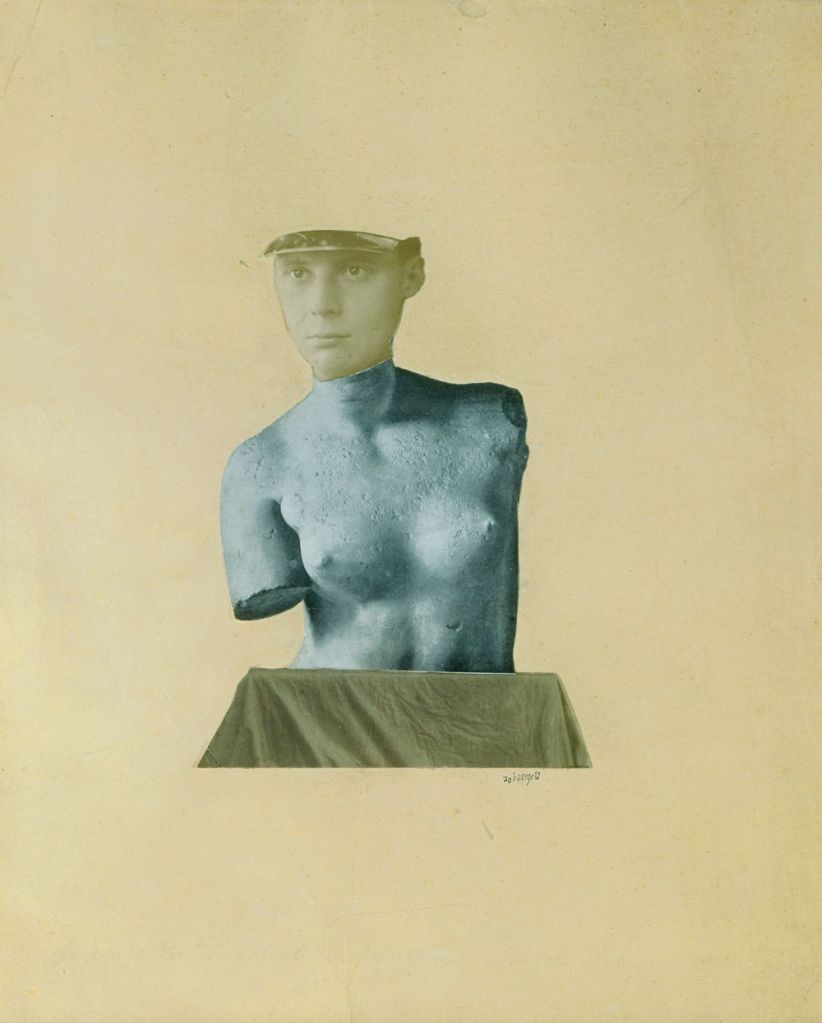
For years, artists have been creating new artistic styles and movements to break free from the traditional norms the artworld was established on. Many of which are famously remembered from the nineteenth and twentieth centuries. Two significant art movements that I have found to be the most interesting to compare are the Dada movement of the early twentieth century, and the Pop Art movement of the later to mid twentieth century. Dada and Pop Art have more comparisons than one may think however, they are still two different movements formed at different times. Dada and Pop Art could be seen as different due to the fact that the physical artworks are created from different points in history, and Pop Art did not comply with many of the traditional characteristics of Dada. However, the two art movements can be seen as similar due to their non-traditional contents and breaking from the artworld’s status quo.
Dadaism is an art movement that started in 1916 which was carried out due to the post effects World War I had on Europe and its economy.1 While Dada has been widely known for its extreme nature and non-traditional creations, it notoriously lasted until 1923. Compared to Pop Art, which went on from 1950 to about 1970, came about in America completely through satire and irony.2 Dada took away from the seriousness of art by forming a movement based around the idea that “anything can be art”3 and developed techniques such as ready-mades and collages. Opposing this, Pop Art which was recognized as, “a mirror of the spectrum of visual communications as well as representative of a constitutive channel (painting),”.4 Due to the creation and purpose behind these movements, their differences still stand out when one is able to narrow down and compare them.

Seeing as though these are two very different art styles, they can also be viewed as similar as well. Dadaism and Pop Art have many similarities between each other in their non-conformist creations of the traditional art world. As stated in Richardson’s journal, “Pop art is anti-social without being at all anti-cultural in the overwhelming sense that Dada was,”.5 What the author means by this, is that both of these significant art movements made it a point to base their work solely around rebellion or irony. Even though Dada took this movement more aggressively against the government, they both added humor and a whimsical energy to the pieces they created; both outside of the art world’s status quo. Another reason as to why these movements are seen as similar is because they compared social issues on consumerism as well. These two movements were said to be a, “direct result of competitive merchandising,” where at these different points in history, consumerism was a developing issue even though their economies were not in the best shape; causing artists to easily make ready-mades or satirical pieces poking fun at these issues going on in the world. 6
Overtime the art world has benefitted through various types of distinct art movements that were formed throughout the years. Many of which, could be seen as derivatives or variations of other movements. Dada and Pop Art could be seen in this way, seeing as though they have many similarities and differences between each other. While Dada and Pop Art were both created differently and during different periods of time, they continue to display many similarities to the purpose of the works created through them.
Sources
Gérard, Durozoi. “Dada in Paris.” History of the Surrealist Movement, The University of Chicago Press (2009).
Harrison, Sylvia. “Post Modern Assumptions.” Pop Art and the Origins of Post Modernism, Cambridge University Press (2001): 11–34.
Mancini, Lindsey. In Class Lecture.
Richardson, John Adkins. “Dada, Camp, and the Mode Called Pop.” The Journal of Aesthetics and Art Criticism 24, no. 4 (1966): 549-58. doi:10.2307/428780.
 Issues in Contemporary Art