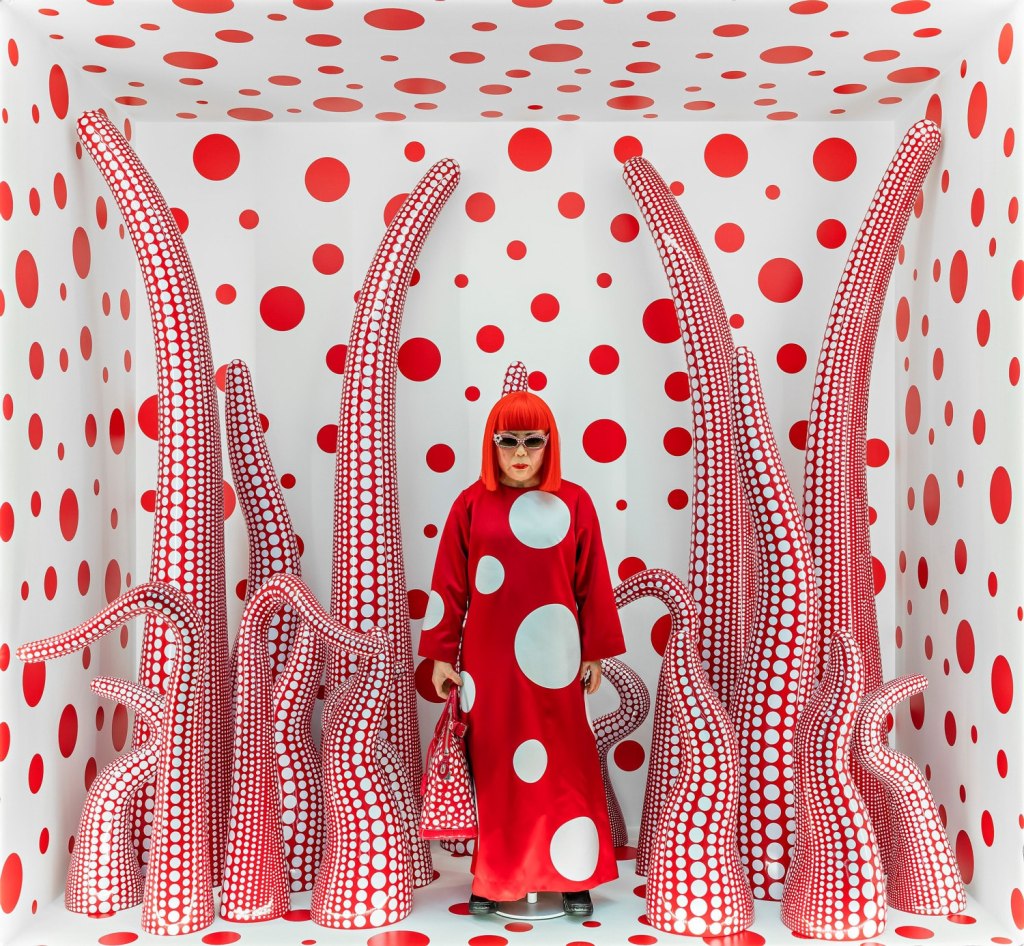
With technology rapidly changing throughout the twenty-first century, many new innovations and discoveries have developed over a short period of time. While many of these technological advances have been to enhance communication, and the everyday lives of people, there have been many other ways that these advances have affected the culture of the art world as well. While there have been many art forms and movements over the past few centuries, a lot of up and coming art forms have been emerging as well. With the inclusion of augmented reality and virtual reality, the art form of immersive installations has been brought to light and is becoming increasingly popular as technology grows stronger. I believe that immersive installations are an important part of history in the art world due to the fact that they bring the viewer into the space of the art, and while using different mediums, give artists the opportunity to let the viewer endelve themselves within their art. This keeps artists thriving by creating these immersive installations because they are given the chance to create in a way they best know how.
Immersive installations are an important part of the history of the art world because they are actually different from AR/VR and stray away from the use of computers and technology. This is of significance because many people today are desensitized to technological improvements, and many forget what it is like to genuinely live “in the moment” they’re experiencing. Immersive installations consist of using patterns, mirrors, objects, lights to submerge the viewer into an alternate form of reality in the physical world around them. Now, the earliest forms of installation art have been traced back from the early 1920’s with works from artists such as Kurt Schwitter, Edgard Varèse, Le Corbusier, and Iannis Xenakis however, over time they developed into something much different. Today, immersive installations have become more complex and creative, giving them the chance to spike in popularity with increasingly new artists and viewers. This art form has impacted the history of our art world by reducing the amount of visual technology being used, and enhancing the viewers’ experience through artwork that is complex and real. This is also of importance because by creating powerful aesthetic environments, the artist is satisfying the viewer’s inherent desire to escape physical reality and become part of the art experience itself.
Out of all the up and coming immersive installation artists, there is one who soulfully brings her artistic creations to life using physical time and space. Yayoi Kusama is one of the most impactful immersive artists of the twenty-first century and continues to do so with her many new ideas and expressions. She claims her installations to be known as “infinity rooms” where she takes her personal experiences of hallucinosis, dissociation, and anxiety to create a physical space where one can submerge themselves in to “get away” from the real world in a safe environment. Yayoi Kusama is part of the reason as to why immersive installations are so pivotal to the history within contemporary art because as an artist, she has grown and developed over time just as the art world has. Some of her original works go as far back as 1965 where she first held a “floor show” consisting of just a mirrored room. Though not being as impactful in earlier years, Yayoi Kusama has mastered her art form by expressing how she struggles with her mentality the most. This is impactful because as a relevant topic of today, many people are now discovering the struggles of their mental illnesses and speaking up about them. Kusama is doing this through her art, but also giving many others a chance to be in a safe environment, whether or not they struggle with their mentality like she does.
Out of all the many new art forms arising in the twenty-first century, I feel as though immersive installations are the most significant. This rising art movement is significant to the history of the art world due to its involvement with the public, and getting people to feel and dive into the art world a loot more. This art form is more than just looking at a painting, it helps the viewer live within the work itself as art history has never truly experienced this on such an impactful level before.
Sources
Applin, Jo. Yayoi Kusama: Infinity Mirror Room–Phallis Field. London: Afterall Books, 2012.
Mitchell, Bonnie. “The Immersive Artistic Experience And The Exploitation Of Space,” CAT 2010 London Conference. January 2010, 98–107. https://doi.org/10.14236/ewic/cat2010.11.
Martin, Isabelle, “A Single Particle Among Billions: Yayoi Kusama and the Power of the Minute”. Oswald Research and Creativity Competition. University of Kentucky, 2017. https://uknowledge.uky.edu/oswald/1
 Issues in Contemporary Art