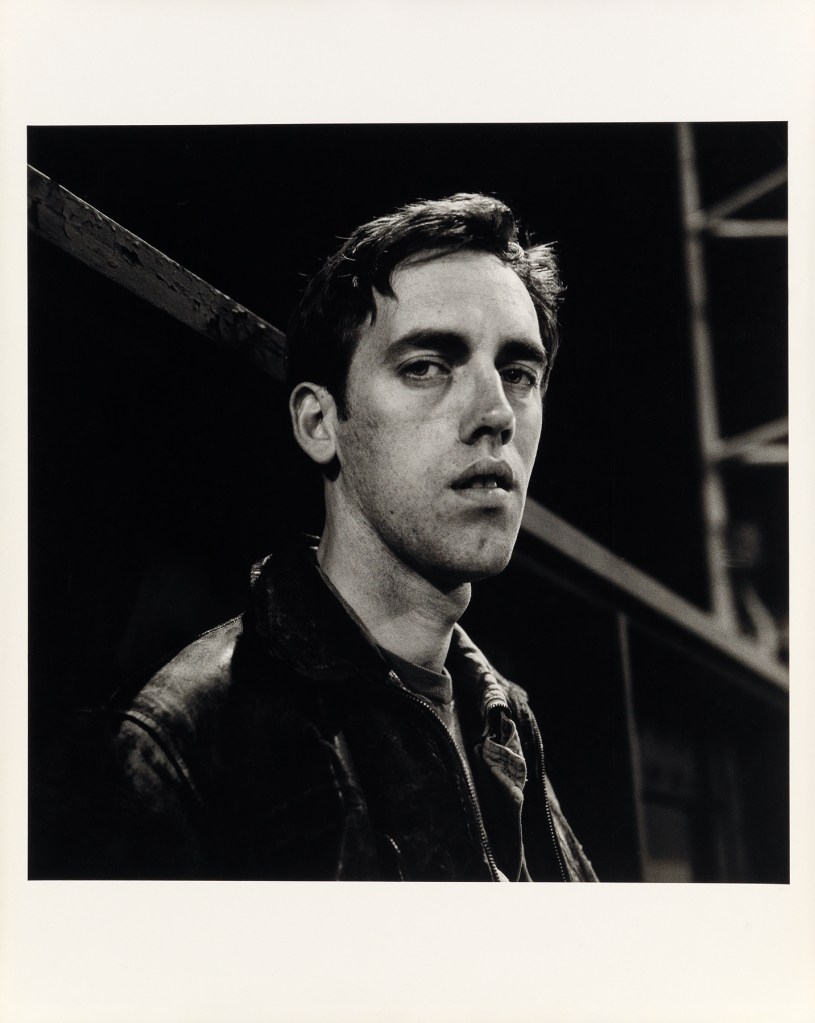
Silver Print; 14.5 x 14.8 in. (36.8 x 37.5 cm).
Image by Artnet.com.
Throughout Western history, especially in the United States, members of the LGBTQ+ communities have faced discrimination. Speaking specifically on the homosexual subsection of the community, people have historically been pressured to keep their sexuality hidden out of fear of public ridicule and physical violence. The fight against LGBTQ+ oppression began in 1924, when Henry Gerber formed the United State’s first documented gay rights organization. Over time this resistance grew, becoming especially prominent in the art world. One artist known for his portrayal of the gay community was David Wojnarowicz. Through a variety of media and artwork, David Wojnarowicz fought to increase visibility of the gay community and voice the issues they faced that society often ignored.

Photostat; 29.8 × 40.1in. (75.7 × 101.9cm). Whitney Collection, New York City, New York.
Image by Whitney.org.
Born in 1954, David Wojnarowicz was a gay American artist and AIDS activist who lived in New York during the AIDS epidemic of the 1980s. Throughout his career, he used painting, performance, film, and photography to draw attention to civil rights and gay identity within American popular culture. Through his art, Wojnarowicz expressed his fear, anger, and frustration by drawing attention to the homophobia, stigmatization, and conservatism that plagued society. In doing so, he gave voice to the marginalized individuals of his community. To accomplish this, many of Wojnarowicz’s projects were based on his own experiences or those of other LGBTQ+ individuals he met during his travels. A particularly strong piece that accomplishes this is Untitled (One Day This Kid…). Created in 1990 and last exhibited in the Whitney Museum in 2018, this piece consists of a black-and-white self-portrait of the artist as a child, surrounded by text. Juxtaposed with the smiling face, the text describes the persecution he would face in his adulthood from his family, church, school, government, and medical communities just for being gay. He describes how the child would be,“faced with electro-shock, drugs, and conditioning therapies,” as well as being, “subject to loss of home, civil rights, jobs, and all conceivable freedoms,” all because, “he discovers he desires to place his naked body on the naked body of another boy.” By combining text and image, the artist makes visible the narrative that he, and many other gay individuals, lived through. In a time where the struggles of the gay community were obscured from the public eye, he stood his ground and made his story heard. The viewer is confronted by the reality that all these terrible acts have occurred to innocent people, including children, because society chose to criminalize life as a gay person—a subject matter that was severely under represented in the art community out of fear of hostility. Wojnarowicz continued to make the struggles of the gay community visible in his photo series titled Room 1423.
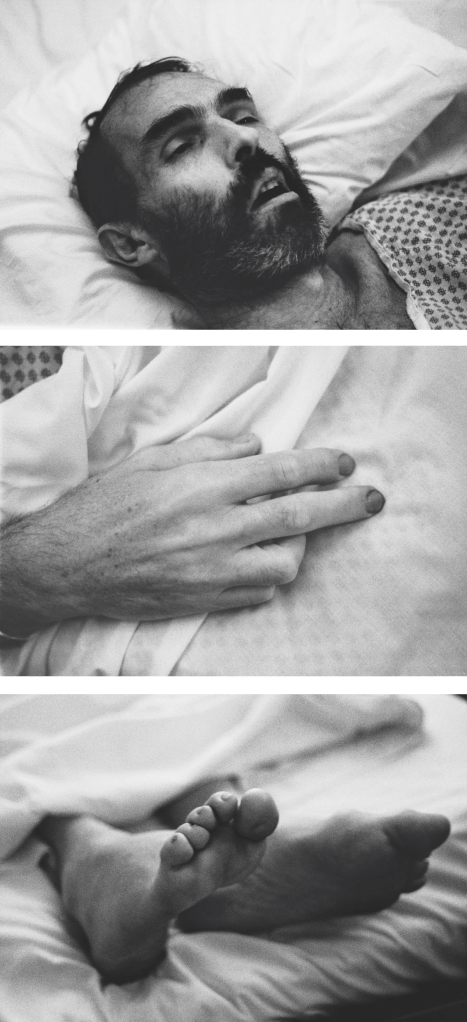
Gelatin silver prints; 30.5 x 24.5in. (77.5 x 62.2cm) each.
Images by Americamagazine.org.
Photographed on November 26, 1987, Room 1423 depicts Wojnarowicz’s close-friend and partner Peter Hujar moments after death. Wojnarowicz was in the hospital room with Hujar when he died from AIDS related complications. Shortly following his passing, Wojnarowicz asked everyone to leave the room so he could photograph Hujar one final time. The three emotional shots he took of Hujar’s head, hand, and feet make up the images in this series. In the first photo, Hujar’s dark lifeless eyes and ajar mouth make for an emotional and haunting image. In another shot, his bony hand rests upon the hospital bed sheets. Lastly, his worn feet can be seen sticking out from under the blanket. Through these images, Wojnarowicz confronts the viewer with the macabre loss of life many faced during the AIDS epidemic. Without words he captures pain and heartbreak, showcasing the humanity and suffering of the gay community to a society that tried to dehumanize them, especially those affected by AIDS. Much like Untitled (One Day This Kid…), viewers are presented with an aspect of gay life frequently hidden from the eye of the public.
Wojnarowicz’s activism through art continued until 1992 when he too passed away from AIDS-related complications.
Throughout his life, Wojnarowicz was continuously pressured into silence by the family that surrounded him, the media that erased him, and the society that fought against him. Though his life was tragically cut short, the efforts he made as an artist and activist helped pave the way for future LGBTQ+ artists and the continued growth of representation in art history.
______________________________________________________________________________
Sources:
“David Wojnarowicz.” David Wojnarowicz Biography – David Wojnarowicz on artnet. Accessed April 8, 2020. http://www.artnet.com/artists/david-wojnarowicz/biography.
“David Wojnarowicz.” Visual AIDS. Accessed April 10, 2020. https://visualaids.org/artists/david-wojnarowicz.
“LGBTQ Activism: The Henry Gerber House, Chicago, IL (U.S. National Park Service).” National Parks Service. U.S. Department of the Interior. Accessed April 9, 2020. https://www.nps.gov/articles/lgbtq-activism-henry-gerber-house-chicago-il.htm.
Smallwood, Christine. “The Rage and Tenderness of David Wojnarowicz’s Art.” The New York Times. The New York Times, September 7, 2018. Accessed April 10, 2020. https://www.nytimes.com/2018/09/07/magazine/the-rage-and-tenderness-of-david-wojnarowiczs-art.html.
“Untitled (One Day This Kid…).” Whitney Museum of American Art. Accessed April 8, 2020. https://whitney.org/collection/works/16431.
 Issues in Contemporary Art