Who am I: The Art of Self-Expression?

The idea of self-expression can be defined the expression of one’s feelings, thoughts, or ideas. Often these thoughts are expressed through one’s creative side such as dance, writing, and even in their art. Art is frequently thought of to express yourself in a way that speaks to you. Photography is an opportunity to communicate without words with infinite possibilities for expression. This can allow an artist to tell you anything and everything without having to tell you the story behind it instead the viewer can look within and try to find a better understanding of what the artist is trying to tell us without having to say anything.

Portraits have been around for over 5,000 years in a time before photography, these portraits were painted, sculpted, or drawn portrait and the only way to record the appearance and capture the likeness of someone. But even then, portraits have always been more than just a record. They have been used to show the power, importance, virtue, beauty, wealth, taste, learning or other qualities of the sitter.[1] In modern photography, self-portraits are sometimes used for self-expression. In today’s time most self-portraits are portrayed as photographs less then painting as most of us in modern time carry around a camera everywhere and can capture anything with a second’s notice. People today with their embedded cameras, have made self-portraits one of the most popular photographic genre. But the idea of self-portraits still shares the same goal no matter the medium that is used to create them. These self-portraits are meant to show the viewers, the under the skin look on who they are by expression themselves in a way in which the viewers gain insight on who the artist is. Self-portraits can come in all shapes and size that use self-expression to tell us a story that betters our understand on the story the artist is trying to portray.

            In my exhibition Who am I: The Art of Self-Expression? I wanted to focus solely on self-portrait produced by women in the medium of photography. The idea that we can capture something of so much meaning in a second is something that modern technology has really expanded on for us. Over this semester, readings focused on many different topics but one of the most eye opening one was the lecture on feminist art. I wanted to incorporate the art that are produced by women and let them tell their stories using self-expression for my exhibition  Christina Otero takes her creative self portraits to a fun, vibrant level. She uses her artistic abilities to push her photographs to the edge between paintings. Otero said that make up in Americas Next Top Model inspired her to start photography, dreaming that one day she would be able to have elaborate photo shoots like the ones featured in the show.[2] She used her photography and elaborate make up to elevate the simplistic nature of a face to a new category. A self-portrait is a portrait is one of the most relevant self-analysis exercises that an artist can do to help.

The expression captured in these photos can help convey the idea intended by the artist. Self-expression can mean many different things to every person you ask. In Otero’s case, she uses her life to create her work while drawing from everything including readings from her favorite authors, quotes that spoke to her, and even metaphors. Christina started her career as an illustrator, she was most drawn to different facial expressions and even female anatomy. She would use her own face and body as subjects for her drawings while incorporating hyperrealism to give the drawing a photographic feeling. With this technique, she shifted her career to become a photographer he specializes in artistic self portraits. In this process of exploration, Christina found that throughout her search that she was her best muse. [3] Otero created a series called Tutti Frutti, she chooses to focus on the bold vibrant colors of fresh fruit and incorporates fruit not only a prop but also as the inspiration for the make up design that she illustrates on her face for each photo. All photos in the series feature focus on the neck up, centering on her face, she incorporates different facial expressions as well as different posing and head positions to create a whimsical and striking collection of self portraits.
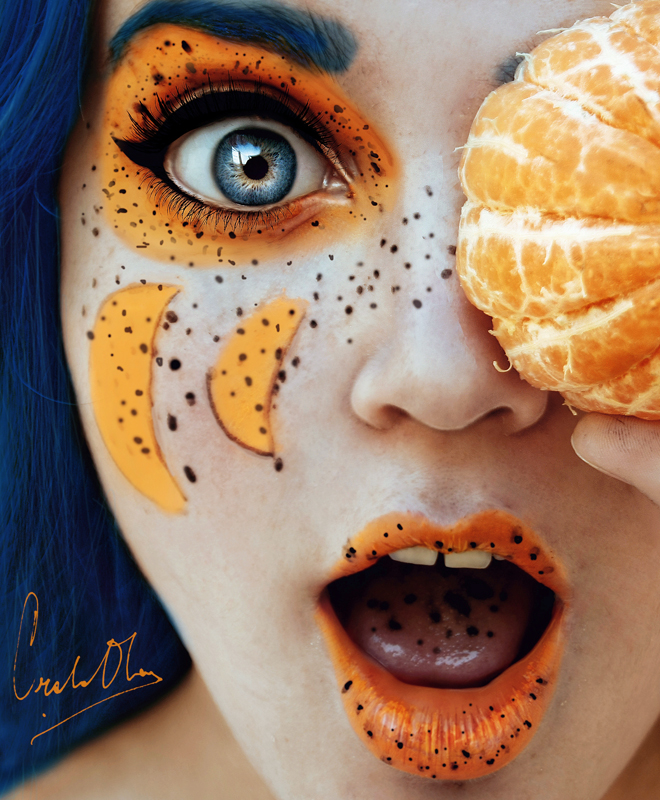
Christina Otero, Mandarina Tutti Frutti. Photograph. ChristinaOtero.com

One of her most popular pieces Mandaria comes from her Tutti Frutti series. [4] This self-portrait features the fruit, tangerine. The tangerine is used as a peeled prop cover up Otero’s right eye and is also featured by using orange make up on her eye and lips with a slice on her face. Her facial expression is relaxed with an open mouth. With the orange make up accenting all facial features she also used black dots as well over these spots, resembling freckles, she also paints these on her tongue so that these dots can be seen with the expression she displays. The vibrant orange of a tangerine contrasts the best against blue when we think about color theory, Otero uses blue eyes, and royal blue hair and eyebrows to really accent against the orange. The idea that she takes such a creative approach on self-expression in her photos was something that really stuck out to me. The idea of using everyday items such a food to create something new is fascinating to me.
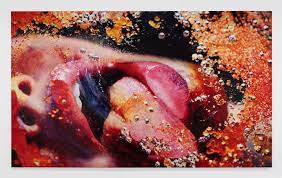
Marolyn Minter, Orange Crush, 2009. Enamel on metal; 108 × 180 inches. Contemporary Arts Museum in Houston, Texas. Artsy.net

The idea of this relates to one of my favorite contemporary photographer Marilyn Minter. Marilyn Minter is an American Contemporary visual artist, she is best known for her sensual take on paintings, photographs, and videos where she explores the emotions around beauty and the feminine body in American culture. Minter wanted her work to make the viewer question the overly commercialization of sex and the body.[5] While Minter doesn’t focus on self-portraits, she uses expression with her models to tell us a story that feminists have been challenging for years. Marilyn Minter: Pretty/Dirty is the first retrospective of her work that focuses the aesthetics of high-fashion editorials, often depicting female bodies adorned with jewels, dirt, saliva, and higher end accessories, mixing in the idea of sexuality and food. [6]

One of Minters most talked about photographs is Orange Crush. This piece is nine feet tall, fifteen feet wide and painted in glossy enamels on an extremely large billboard-size metal panel. This large then life display takes up the entire display area and draws the viewers in. Displayed is a faceless woman with her lips open and tongue licking the glass, the mouth is trying to lick up all the brightly colored orange cake that has been smeared across the glass. Minter really shows us her unique method of photography with this piece, I think her entire collection really embodies the idea of over sexualization that many contemporary feminist artists have been influenced by. The self-expression that she puts into her work when it comes to props and posing to speak up against the problems females face is something that I believe would help solidify the exhibition pieces even if its not a self-portrait.

Feminist art is an art movement that really sparked conversation for the equality of women. Artists used the ideas that women shouldn’t be objectified and point out the flaws in our system with their work. Art historian Linda Nochlin was known for her views on feminism and how women should be seen in the same way as men in the art world. “Feminist art history is there to make trouble, to call into question, to ruffle feathers in the patriarchal dovecotes. It should not be mistaken for just another variant of or supplement to mainstream art history. At its strongest, feminist art history is a transgressive and anti-establishment practice, meant to call many of the major precepts of the discipline into question.” [7]

Nochlin’s words paved the way for Feminist photographer Cindy Sherman. For forty years, Cindy Sherman, known as the great chameleon of our time, has created more than 500 photographs. All these photos are photos she takes of herself, but Sherman doesn’t refer to them as self-portraits. She turns herself into a character to express her idea in each photo she takes, she is said to have created almost 500 different characters for herself in the forty years of photography. She has transformed herself into high-society women, bikers and horror babes, lonely-hearts and killer clowns. Each character she creates is a new persona she reflects into her work; she has even portrayed characters in reference to icons like Madonna. [8] Marilyn Minter gives credit to Sherman for being her inspiration into photography, she is quoted saying “you cannot take a photograph without the entire history of Cindy Sherman’s oeuvre behind it.”

Cindy Sherman is a huge part of the foundation that started feminist art, without her work the idea of the male gaze wouldn’t be what it is today and something that most artist focus on when exploring feminist art. Sherman herself said that she doesn’t like to disclose the exact meaning behind her photographs as she prefers the frenzy of different interpretation people give.[9] Having one of Shermans photographs as a apart of this exhibition would help include the idea of where feminist art started. She was someone most of these newer artists followed for inspiration, someone who helped them understand that you can tell whatever you want in your photographs as she told every story she could think of from clowns to classy women. Untitled #574 would be the photograph I would include in my exhibition. Sherman depicts herself a high society woman in this photo, there is a red background with her in the foreground seated in a formal manner in a chair. She is clothed in all blue and turquoise clothing creating a vibrant contrast of colors. She wears a darker blue hat that is fitted to her head with a tiny bit of short orange hair exposed against her face. Her face is angled upward toward the light source but is very plain with make up that furthers the idea of a well-respected women. Her chest is covered in a blue fur shawl that covers her top torso, she places one hand over her chest, and her hands are adorned with royal blue gloves. These blue colors contrast beautifully against her silk turquoise dress. All these different textures and colors make for an interesting composition. Sherman has never expressed the meaning she felt for creating this image but by many sources, the consensus is she is playing the role or a put together high-society women and is posing for a portrait.[10]  
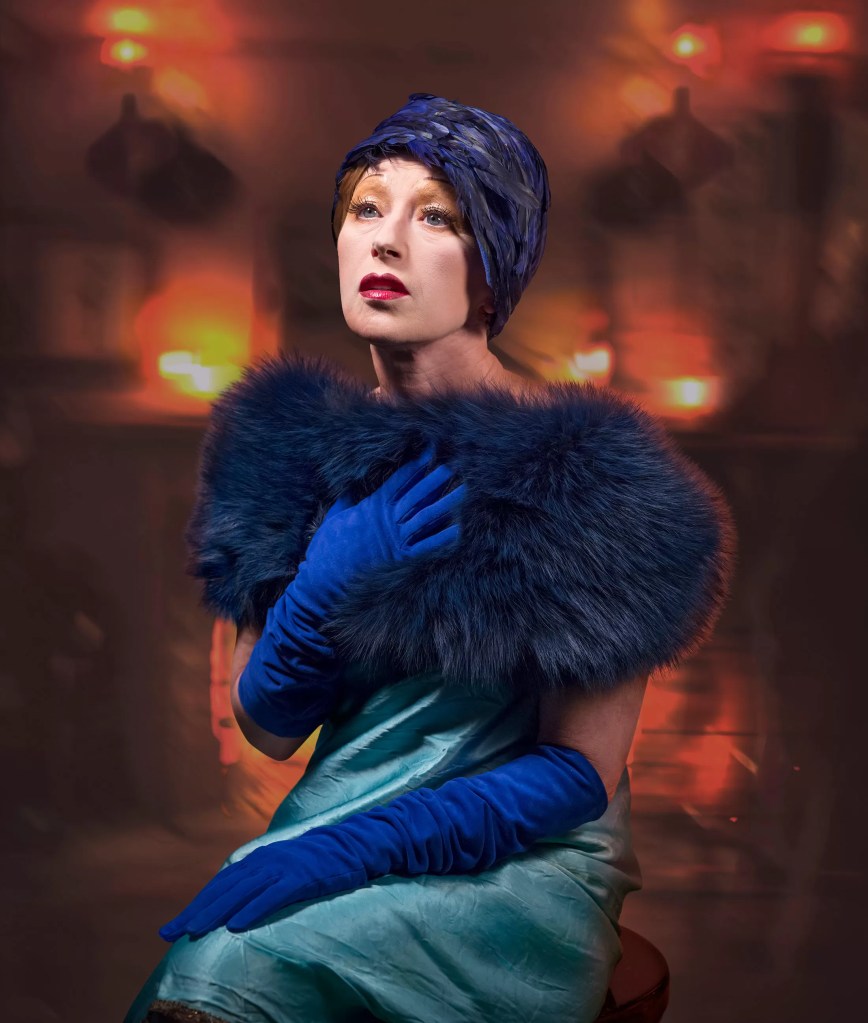
Untitled #574, 2016, dye sublimation metal print. Cindy Sherman artworks courtesy of the artist and Metro Pictures, New York. Montecristo Magaizine

Another turn of the century photographer is Francesca Woodman, best known for her haunting black and white photos. Her work was ignored by most of the art world during her life and she was referred to as tragic. Through her time, she fought with her depression, and unfortunately, she took her own life at the young age of twenty-two. Despite the rough start she had to the art world, after her death her photos became a present part of the world she longed for. Woodman’s work used conceptual and surrealism concepts to create her self-portraits. [11]
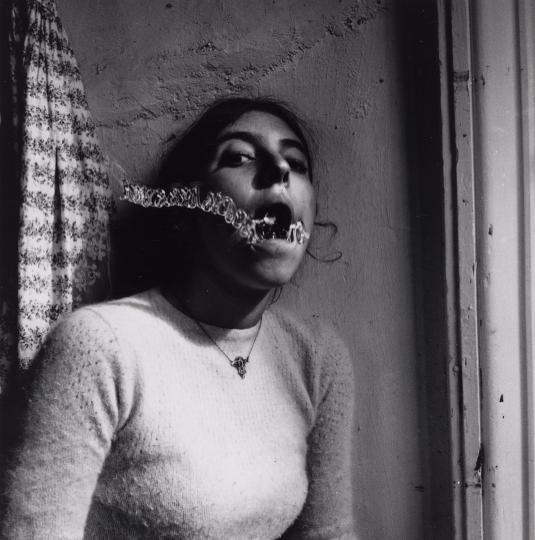
Francesca Woodman, Self-Portrait Talking to Vince 1980. Gelatin Silver Print. SCAD Museum, SCADMOA.org

A Woodman self-portrait lets us have a large insight into the mind of someone who was struggling with life. I believe she used this tortured feeling that she had to express a tortured feeling in her work. The photo that I want to have as part of my exhibition is Self-portrait talking to Vince. the overall feeling of the photo is distressed, very dark, it really tells us the story of Francesca life. Considering she isn’t here to explain her work the world looked to her family and friends for explanations. They have said that they feel like her art was telling us how much she was struggling.[12] Depicted in this specific black and white portrait is Woodman sitting with her head tiled up and mouth forced open, in her mouth there is a clear material which seems to be gagging her mouth. The overall photo is dark with little to focus on besides her mouth. It is an extremely tortured look she is giving the viewer; it shows us how she felt during that time, and how she wanted to express the struggle she was dealing with during 1977. Woodman isn’t the only artist that uses her feelings to portray an image in her work.

Much like Francesca Woodsman, photographer Jennifer Kiaba uses her life to tell us the story of her life through self-expression in her self-portraits. Kaiba’s story started at a young age, this is her explanation of herself expression.

“Self-portraiture, for me, is a tool for self-exploration. I use it to peer into my psyche, and to begin to unravel the inner workings there,” she says. “I was born into one of the most notorious cults of the ‘70s and ‘80s in the United States – the Unification Church. That experience warped my perspective on what it meant to be a woman and what my inherent value was. Since extricating myself from the group in my late teens, it has been a long road to healing and rewiring my mind in an attempt to undo the damage of the cult.”[13]
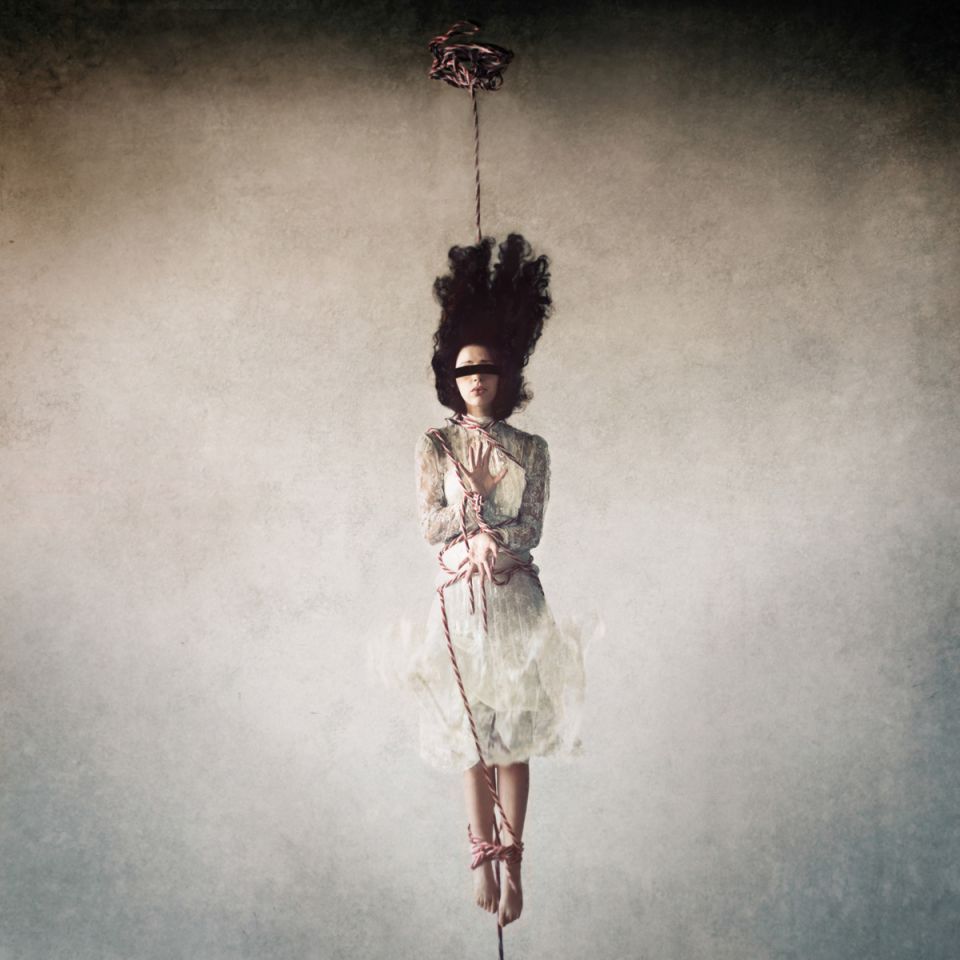
Jen Kiaba. Hold Your Peace, from series Burdens of a White Dress, 2013. Photograph. Soho Photo Gallery JenKiaba.com

Kiaba is very open about her experience and hard upbringing and talking to many people out there who are struggling. She began doing photography to bring clarity into her life so that she could heal from the trauma she suffered. The self-portrait from her collection I want to include is Hold Your Peace, from the series, Burdens of a White Dress. This series helps Kiaba use self-expression to explain the feeling she had while growing up in a cult and the experiences she had to go through. Specifically, this talks about how within the cult she was forced into marriage and this series helped her express her feeling from that forceful experience she had to endure. She described this photo as her way of exploring the issues of forced marriage. Within this photo, Jenn photographs herself in a white dress with her hands, body, and eyes all bound. She uses tight body language to express the discomfort she felt and the rope to explain the torture she had to go through. Kiaba really taught us that self-expression is the technique that she uses to understand how she truly feels about her life. [14]

            All these portraits have different meaning hidden below the surface embracing the artists self-expression. Throughout each of their lives there was always something they wanted to share, whether it be illustrated skill, depression, a flaw in society or even the way you grew up. Each of these female artists show a different side to self-expression, giving us a better idea of who they are and the message they’re trying to portray.[15] The idea of artist expression is a phenomenal experience because as the viewer we can all come up with different interpretations of the message we think the artist is telling. Self-expression is subjective without an explanation for its creator but either way it truly gives us a deeper connection to the artist and what they believe in.

Sources

“16-Year-Old Photographer’s Jaw-Dropping Self-Portraits (Photos).” HuffPost. HuffPost, June 29, 2012. https://www.huffpost.com/entry/cristina-otero-16-year-ol_n_1625715.

Bengal, Rebecca. “What We See Now When We Look at Francesca Woodman’s Photographs.” Vogue. Vogue, January 26, 2016. https://www.vogue.com/article/francesca-woodman-photographs.

Burnett, Craig. “The Complex Characters of Artist Cindy Sherman’s Non-Self Portraits.” MONTECRISTO. Accessed December 10, 2021. https://montecristomagazine.com/magazine/volume-12/cindy-sherman.

Candide McDonald | 24 October 2018. “Look at Me: The Art of Self-Expression.” Capture magazine. Accessed December 10, 2021. https://www.capturemag.com.au/advice/look-at-me-the-art-of-self-expression.

“Cindy Sherman: Moma.” The Museum of Modern Art. Accessed December 10, 2021. https://www.moma.org/artists/5392.

Knight, Christopher. “Marilyn Minter’s ‘Pretty/Dirty’ Show Allures and Repulses All at the Same Time.” chicagotribune.com, April 23, 2016. https://www.chicagotribune.com/la-et-cm-marilyn-minter-review-20160422-column.html.

Luis, Angel Jiménez de. “What Is Self-Portraiture and How to Master It: Blog.” Domestika. DOMESTIKA, November 3, 2020. https://www.domestika.org/en/blog/4352-what-is-self-portraiture-and-how-to-master-it.

“Marilyn Minter: Pretty/Dirty,” Brooklyn Museum: Marilyn Minter: Pretty/Dirty, accessed December 10, 2021, https://www.brooklynmuseum.org/exhibitions/marilyn_minter_pretty_dirty.

Samuelson, Kate. “Are Selfies Art? New Saatchi Gallery Exhibition Says Yes.” Time. Time, March 31, 2017. https://time.com/4718143/selfie-exhibition-saatchi-gallery-london/.

Sehgal, Parul. “The Ugly Beauty of Cindy Sherman’s Instagram Selfies.” The New York Times. The New York Times, October 5, 2018. https://www.nytimes.com/interactive/2018/10/05/magazine/instagram-cindy-sherman-ugly-beauty.html.

Stewart, Jessica. “10 Famous Photographers Whose Self-Portraits Are Much More than Just a Selfie.” My Modern Met, July 13, 2021. https://mymodernmet.com/famous-self-portrait-photographers/.

Tate. “Portrait – Art Term.” Tate. Accessed December 10, 2021, https://www.tate.org.uk/art/art-terms/p/portrait.


[1] Tate. “Portrait – Art Term.” Tate. Accessed December 10, 2021

[2] 16-Year-Old Photographer’s Jaw-Dropping Self-Portraits (Photos).” HuffPost. HuffPost, June 29, 2012. https://www.huffpost.com/entry/cristina-otero-16-year-ol_n_1625715.

[3] Luis, Angel Jiménez de. “What Is Self-Portraiture and How to Master It: Blog.” Domestika. DOMESTIKA, November 3, 2020. https://www.domestika.org/en/blog/4352-what-is-self-portraiture-and-how-to-master-it.

[4] 16-Year-Old Photographer’s Jaw-Dropping Self-Portraits (Photos).” HuffPost. HuffPost, June 29, 2012. https://www.huffpost.com/entry/cristina-otero-16-year-ol_n_1625715.

[5] Knight, Christopher. “Marilyn Minter’s ‘Pretty/Dirty’ Show Allures and Repulses All at the Same Time.” chicagotribune.com, April 23, 2016. https://www.chicagotribune.com/la-et-cm-marilyn-minter-review-20160422-column.html.

[6] “Marilyn Minter: Pretty/Dirty,” Brooklyn Museum: Marilyn Minter: Pretty/Dirty, accessed December 10, 2021, https://www.brooklynmuseum.org/exhibitions/marilyn_minter_pretty_dirty.

[7] Women, Art, and Power and Other Essays, Linda Nochlin

[8] Parul Sehgal, “The Ugly Beauty of Cindy Sherman’s Instagram Selfies,” The New York Times (The New York Times, October 5, 2018), https://www.nytimes.com/interactive/2018/10/05/magazine/instagram-cindy-sherman-ugly-beauty.html.

[9] Craig Burnett, “The Complex Characters of Artist Cindy Sherman’s Non-Self Portraits,” MONTECRISTO, accessed December 10, 2021, https://montecristomagazine.com/magazine/volume-12/cindy-sherman.

[10] “Cindy Sherman: Moma,” The Museum of Modern Art, accessed December 10, 2021, https://www.moma.org/artists/5392.

[11] Stewart, Jessica. “10 Famous Photographers Whose Self-Portraits Are Much More than Just Selfie.” My Modern Met, July 13, 2021. https://mymodernmet.com/famous-self-portrait-photographers/.

[12] Bengal, Rebecca. “What We See Now When We Look at Francesca Woodman’s Photographs.” Vogue. Vogue, January 26, 2016. https://www.vogue.com/article/francesca-woodman-photographs.

[13] Candide McDonald | 24 October 2018. “Look at Me: The Art of Self-Expression.” Capture magazine. Accessed December 10, 2021. https://www.capturemag.com.au/advice/look-at-me-the-art-of-self-expression.

[14] Candide McDonald | 24 October 2018. “Look at Me: The Art of Self-Expression.” Capture magazine. Accessed December 10, 2021. https://www.capturemag.com.au/advice/look-at-me-the-art-of-self-expression.

[15] Samuelson, Kate. “Are Selfies Art? New Saatchi Gallery Exhibition Says Yes.” Time. Time, March 31, 2017. https://time.com/4718143/selfie-exhibition-saatchi-gallery-london/.
Exhibition Review on Britain in the World: A Display of the Collections

Kehinde Wiley, Portrait of Lynette Yiadom-Boakye, Jacob Morland of Capplethwaite 2017
Oil on canvas 120 5/16 × 93 5/16 in. (305.6 × 237 cm)
Yale University Art Gallery and Yale Center for British Art, Purchased with a gift from Mary and Sean Kelly in honor of Courtney J. Martin and with the Janet and Simeon Braguin Fund and Friends of British Art Fund

Britain in the World: A Display of the Collections is an exhibition featured at the Yale Center for British art in New Haven, Connecticut. “This installation reveals how frequently the story of art in Britain focuses on a narrative of international exchange. This arrangement addresses the impact of immigration and travel on British art and culture across the centuries, and the role that the arts have played in propagating Britain’s imperial vision—exploring the ways in which the perception of the British Empire influenced how Britain’s saw themselves and others.” The overall them is very well reflected among each piece of art displayed in this collection. We see many different depictions as well as many different time periods displayed throughout this exhibition giving us a wider look into the theme of British culture and the travels they faced.
When walking into the museum, this is the first exhibition you walk through, as you walk in you see billboard size artwork displayed up the wall with a larger than life feeling. It is a truly beautiful first sight and really a stupendous way to start an exhibit. However, the exhibition is split between two floors, and we have the large circular shaped grand room, but the rest of the floor is of a completely different exhibition giving a very unsettling and disconnected feeling. The rest of the Britain in the World Exhibition is up two floors higher, leaving us very disconnected overall. The fourth floor is very well lit with white walls the really contrast the artwork well; most of them have gold frames which helps the balance. One eye-catching feature is noticeable while on the top floor, you have an opening where you can look out to the center of the building and if you look down you see the rest of the exhibition two floors down. It is a very interesting lookout point that the viewer can use, but even with the two-floor layout I still find the space that is set in chronological order, to be arranged in very pleasing way.
A few pieces of art that stuck out to me and made an impression on the overall theme of British culture included, a portrait of the artist Lynette Yiadom-Boakye by Kehinde Wiley and Theodor von Holst’s The Wish, 1840. These two painting are a part of the British in the World Exhibition and are both feature portraits of women but in a very different way. I think these two represent strong women, one dated back to the mid-nineteenth century and one in today’s time of the twenty-first century. Wiley’s painting is bold and vibrant, representing another artist in a strong way as a Scottish bunny hunter. However, Holst paints a darker vibe portrait of a women that appears to be a psychic, hence the title the wish. I found myself drawn to both pieces, overall, there is many unique and different styled pieces in the exhibition that might speak to you.
In conclusion, I would have to rate British in the World Exhibition a four out of five. While the artwork was incredible filling with many different forms and style that touch on all art created by the British and their culture throughout their journeys The setup of the exhibition really leaves the chronological set up disjointed and confusing. It seems like two different exhibitions because of the layout instead of one big cohesive exhibition. I feel as if it would’ve been better to keep the exhibition on just one floor so we could fully divulge in the art instead of starting the exhibition, going into another that is completely different and then going back.

Sources
“Britain in the World: A Display of the Collections.” Yale Center for British Art. Accessed October 3, 2021. https://britishart.yale.edu/exhibitions-programs/britain-world-display-collections.
“YCBA Collections Search.” On. Accessed October 6, 2021. https://collections.britishart.yale.edu/?f%5Bdetailed_onview_ss%5D%5B%5D=On%2Bview.
“Kehinde Wiley: A New Republic.” Brooklyn Museum: Kehinde Wiley: A New Republic. Accessed October 6, 2021. https://www.brooklynmuseum.org/exhibitions/kehinde_wiley_new_republic/.

The Exploration Between Surrealism and Expressionism

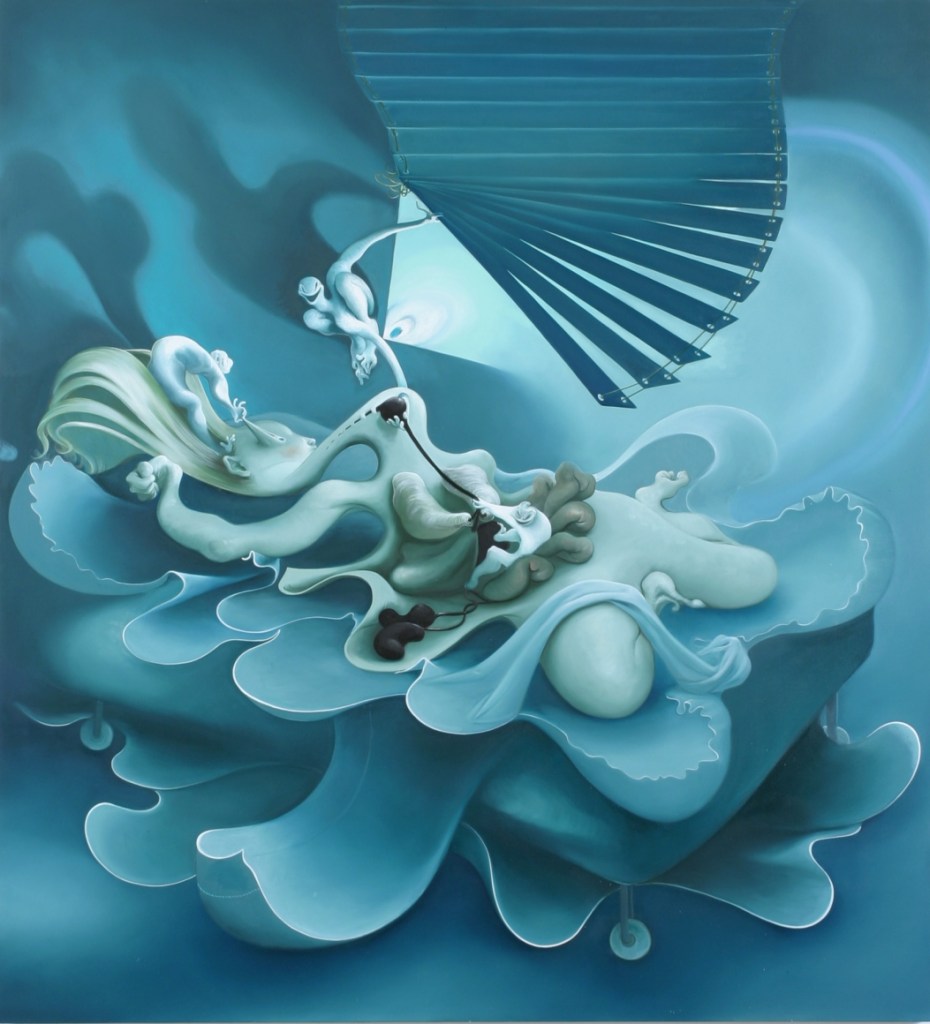
Inka Essenhigh, In Bed. 2005. Oil on Canvas; 68 X 62 inches. 303 Gallery, New York

In the beginning of the twentieth century art was moving more towards mind tantalizing ways then we had previously seen before. Surrealism is the art movement that started in the 1920s and the main concept is for you to look beyond what your eyes are seeing and use your subconscious mind to understand what you’re looking at. Expressionism dates to 1910 with the idea of the artists understanding and not necessarily reality itself but more so the meaning, the expression behind the object or experience. Both requiring the viewer to look further then what meets the eye, surrealism and expressionism are two very different art movements allow us to explore our subconscious mind to reveal deeper meanings.

These two art movements came about in very different ways. But I feel as though they have such a strong connection in the art world as final pieces. “Although both Surrealism and Expressionism are troubled with the perception of the unconscious behavior, surrealism is conventional in introduction while the later one is over-romantic.”[1] Robert Hobbs was known for  exploring the idea of expressionism and surrealism in the hope to understand their methods and help us become aware of their different techniques. But just because two things are done in different ways doesn’t mean they cannot be similar. I think it in fact makes them have even more in common as a complete art piece.

For example, I took a further look at Inka Essenhigh, In Bed. This piece depicted the Surrealism art style, we see a blue tinted representation of a women lying in bed. The woman appears to be stretched out in a way of resembling an octopus with extremities extended out cascading through the canvas. This woman lays over a large bed with the sheets draping alongside her tentacles creates a sea-like feeling. As we begin to look even further, we notice what appears to be window with blinds, that lurk down over the women creating a lurking demon like effect. This depiction instantly reminds the onlooker of a nightmare scene, from the muted blue tones to the unrealistic and eerie aspects to the whole. The entire image requires us to look closely and really use our minds to feel and see everything the artist is trying to tell us in the canvas. This instantly compares to Käthe Kollwitz Death Grabbing at a Group of Children (Tod greift in eine Kinderschar) from the series Death (Tod). In a completely different medium and style, we see here a child in pain; he looks to be screaming and a dark figure coming above that is taking him. From the title we can infer that this figure is death, here to take the child. This again, is a dark piece that with a little subconscious thought we can understand the entire meaning of the piece. The lithograph medium helps us understand the depth and darkness surrounding the underlying meaning of this piece.

When comparing these two styles we can see a line connecting the subconscious mind among surrealism and expressionism to one another. While they have their differences, the overall depicted art from these movements both display a deeper psychological response that the viewer uncovers.

Bibliography

Hobbs, Robert C. “Early Abstract Expressionism and Surrealism.” Art Journal 45, no. 4 (1985): 299–302. https://doi.org/10.2307/776801.

Park West Gallery. “What Is Surrealism? How Art Illustrates the Unconscious.” Park West Gallery. Park West Gallery, January 7, 2021. https://www.parkwestgallery.com/what-is-surrealism-art/.

Polcari, Stephen. “Abstract Expressionism: ‘New and Improved.’” Art Journal 47, no. 3 (1988): 174–80. http://www.jstor.org/stable/777043.

Taylor & Francis. “Early Abstract Expressionism and Surrealism.” https://www.tandfonline.com/doi/abs/10.1080/00043249.1985.10792314?tab=permissions&scroll=top.

Inka Essenhigh. In Bed, 2005. Oil on canvas. (A&T 29)

Käthe Kollwitz. Death Grabbing at a Group of Children (Tod greift in eine Kinderschar) from the series Death (Tod), 1934. Lithograph. Museum of Modern Art Collection.


[1] Hobbs, Robert C. “Early Abstract Expressionism and Surrealism.” Art Journal 45, no. 4 (1985): 299–302.

Contemporary Traditional Art of Tlisza Jaurique

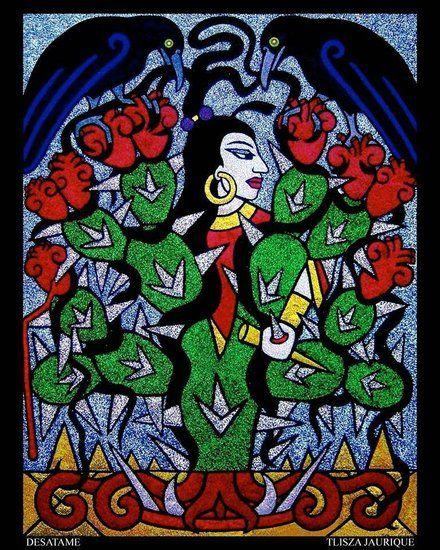
Tlisza Jaurique, “Desátame,” (Unravel Me), 2005. Painting.  Taller Puertorriqueño’s Lorenzo Homar Gallery

Over the time we have spent looking at art and artists in the course I have found myself drawn to artists I find connections with. While researching, I came across Tlisza Jaurique, her work is mesmerizing, while combining traditional Latin culture with new media. Jaurique pulls from her Mexican roots to show her cultural identity throughout all her work. She tends to prominently create her work inspired by traditional Mexican celebrations such as day of the dead and the feast day of the Virgin of Guadalupe. Jaurique work incorporates a mix of topography, painting and sculpture while showing clearing iconography with a pinch of glitter. The expression behind her work is to give us insight on the meaning of Mexican traditions using symbolism and beauty.[1]

Tlisza Jaurique brings a whole new light to Western art through all of her work with the use of her main ingredient, glitter. When we think of glitter we tend to think of something involving a child’s arts and crafts project. But Jaurique uses glitter in a way that enhances the strong figures and symbols her art is centered around in a way that accentuates her art and does not diminish it. The glitter is along the circular mirrors in her pieces to show emphasize the idea of reflection.[2] Using this technique makes us the viewer feel directly involved into the work, whether we can fully understand what is being portrayed. Taqueria makes us challenge our first thoughts and dig deeper to understand of the Mexican traditions and history she is so proud of. By using glitter in the empowering yet contemporary way, the layering of materials and cultural symbolism create a unique and honorary body of work.

Chicana art is about expressing the cultural ideas of Mexican culture. Tlisza clearly embodies this and using her cultures to shock meaning into all her work. Her art is all about the spirit of Mexican traditions while pushing the politics she places among her art which are often very subtle. These ideas can often be overlooked by the pure beauty of her art, however once we as the viewers recognize these things, we cannot unsee the importance of them. She connects her work to issues like many other Chicana artists.[3] Specifically, she uses the issues around the border through an activist approach to create meaning in all her art she communicates these issues through tiny details throughout her pieces. Tiny details that include things like the Virgin, sacred hearts, cacti, and even speech scrolls all have important meaning in her Mexican heritage.

One of her most striking and intellectually challenging pieces is her 2005-piece Desatame, (unravel me). This piece hangs on the wall and immediately we were drawn in by the bright colors portrayed throughout around the piece. The entire piece is glitter, besides the black border, but in every component and layer we see symbolism speaking to the issues that Latin American artist face. We also see the same features and center focal point of a strong women featured in her 2000’s piece Mayahuel.[4] Both works by Jaurique clearly intertwine the Chicana culture with the underlying meaning of women empowerment and cultural appreciation flowing through the entire body of art.  

Jauquire does such an astounding job tying in her cultural traditions in a new contemporary fashion. Her art is so bright and fun, but by using a limited palate the glitter does not become overwhelming, instead it adds another layer for us to digest. Tlisza Jauquire is a great representation of a Chicana artist trying to help others fully understand the culture of Latin American artists, and how express issues they face in their culture in their work using symbolism while keeping the art intriguing.  The way she can use so much traditional heritage and turn it into a contemporary piece, while using a material many never thought of as inspiring.

Sources

 “About the Art.” La Barca Cantina, May 4, 2021. Accessed October 21, 2021 https://labarcacantina.com/about-the-artist/.

“A Contemporary Madonna Counterpoint:Mexico & Puerto Rico/ On View through April 12.” Taller Puertorriqueo. Accessed October 21, 2021. https://tallerpr.org/contemporary-madonna-counterpointmexico-puerto-rico/.

“Tlisza Jaurique Glitters at Taller Puertorriqueño.” Artblog, July 9, 2019. Accessed October 21, 2021 https://www.theartblog.org/2014/04/tlisza-jaurique-glitters-at-taller-puertorriqueno/.


[1] About the Art.” La Barca Cantina, May 4, 2021. Accessed October 21, 2021 https://labarcacantina.com/about-the-artist/

[2] “Tlisza Jaurique Glitters at Taller Puertorriqueño.” Artblog, July 9, 2019. Accessed October 21, 2021 https://www.theartblog.org/2014/04/tlisza-jaurique-glitters-at-taller-puertorriqueno/.

[3] “A Contemporary Madonna Counterpoint:Mexico & Puerto Rico/ On View through April 12.” Taller Puertorriqueo. Accessed October 21, 2021. https://tallerpr.org/contemporary-madonna-counterpointmexico-puerto-rico/.

[4]  “About the Art.” La Barca Cantina, May 4, 2021. Accessed October 21, 2021 https://labarcacantina.com/about-the-artist/

New World Photographer, Neeta Madahar Bibliography

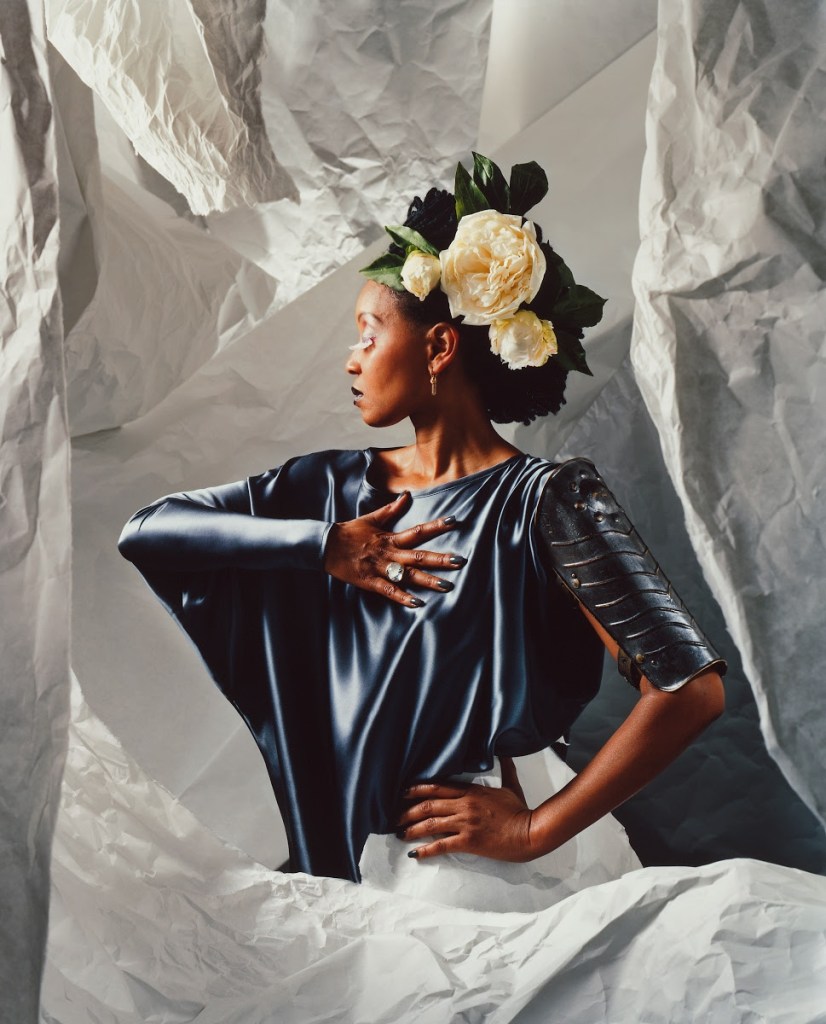
Title: Sharon with Peonies
Creator: Neeta Madahar
Date Created: 2009
Physical Dimensions: 40 x 30 inches, 45 x 37⅜ x 1 inches framed
Type: Photograph
Rights: Collection of the Kemper Museum of Contemporary Art, Kansas City, Missouri, Gift of Neeta Madahar and Paul Hemingway. © Neeta Madahar. Photo: Miller Yezerski Gallery, Boston.
Medium: chromogenic color print on Kodak Ultra Endura paper

Neeta Madahar was born in 1966 in England, she went through many years of schooling originally getting a degree in mathematics. She chooses to follow her own path rather than her families and furthered her education with a degree from the Winchester School of Art in 1999 where she focused on videography. She then went on to the University of Southampton in England and received a BA Honors degree in Fine Art. In 2003, she graduated from the School of the Museum of Fine Arts, Boston and Tufts University, Boston with a Master of Fine Art degree in Studio Art. During the end of her studies, she completed her thesis work called Sustenance, this was her first work that got the attention and recognition her work deserved.
Madahar is a British citizen with her cultural upbringing coming from her Indian roots, who lived and worked in the United States. This unique upbringing helped her find ways to references themes of transition and migration in her work. She is most known in the art world for her interesting photography in which she explores natural aspects in different perspectives about what is real versus perception and the power of observation. Her first major show was in 2004, creating a new look in the world of photography.
Neeta Madahar has exhibited her work both in the United States and Europe. She has even had a solo show in Oakville Galleries, in Ontario Canada back in 2007. Other than the many shows she has been apart off Madahar has been rewarded several prestigious commissions from places like Hardwood House, Film and Video Umbrella, and Photoworks. These are companies that work to serve the general public in easily accessible ways. On top of that, her work is kept in many public collections including the Victoria and Albert Museum in London and Harvard University’s Fogg Art Museum in Massachusetts.
Madahar has been featured in well-known publications like The New York Times, The Boston Globe and even Aesthetic Magazine. She was even a top feature in Portfolio magazine’s special issue about the UK’s fifty most significant contemporary photographers. Since then, was awarded by the National Media Museum in the UK a very prestigious award of the Bradford Fellowship in Photography. The museum even decided to culminate her major solo exhibition from October 2009 to February 2010.

Sources
Instagram. Accessed October 5, 2021. https://www.instagram.com/neeta_madahar/.
“Neeta Madahar.” Aesthetica Magazine. Accessed October 5, 2021. https://aestheticamagazine.com/neeta-madahar/.
“Neeta Madahar.” Brooklyn Museum: Neeta Madahar. Accessed October 5, 2021. https://www.brooklynmuseum.org/eascfa/about/feminist_art_base/neeta-madahar.
“Official Website of Neeta Madahar – Fine Artist, Yoga and Meditation Teacher.” Neeta Madahar – fine artist, Yoga and meditation teacher. Accessed October 5, 2021. https://www.neetamadahar.com/.

Reflection on Jerry Saltz’s “Why is the Met’s New Show in Art History so Stultifying and Dull

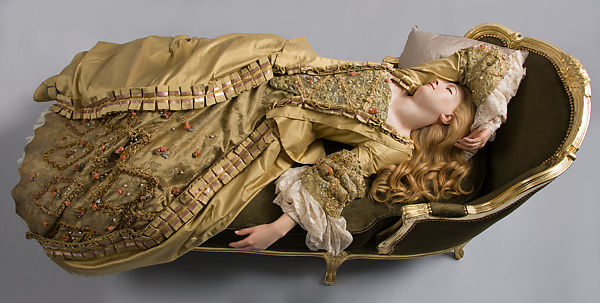
Sleeping Beauty, Philippe Curtius 1989, Sculpture; 32 11/16 × 65 3/8 × 29 1/8 in., 112.4 lb. New York. The Metropolitan Museum of Art [The Met Breuer]. “Like Life: Sculpture, Color, and the Body,” 

In Jerry Saltz article about his response on The Met Exhibition Life Like, we as the readers learn about his opinions on this hyperrealism take on the body. He described this exhibit as a frenemy, while in his response criticizes the fast in the artwork chosen with the met being such a prestigious museum. Saltz calls the exhibit “devolatilizing slog” which doesn’t make anything sound even remotely appealing about it. He bashes the western art that the exhibit is comprised of but compliments its equality with being a fair mix of both male and female nudes which was often not seen before the me-too movement. With all the negativity about this exhibit he finishes off with stating that he still recommends it, specifically for its unique pieces that would often not be featured or seen by those

My overall response to the content was overall shock by the amount of negativity Saltz combined in his writing. It seems like a very harsh critique and review of something that from my understanding is exactly what it says it is. I went into further detail looking up this exhibit so I could see it all and read the Mets description of it and compare it to how Saltz described it. He seemed very angry at the exhibit as it was almost a letdown but for me isn’t this the same with every exhibit put together, there is always going to be someone who doesn’t understand the overall tones and meaning behind the work. But it’s still important to learn about and see things we wouldn’t necessarily be interested in or understand fully.