Escaping Reality

Yayoi Kusama

With technology rapidly changing throughout the twenty-first century, many new innovations and discoveries have developed over a short period of time.  While many of these technological advances have been to enhance communication, and the everyday lives of people, there have been many other ways that these advances have affected the culture of the art world as well.  While there have been many art forms and movements over the past few centuries, a lot of up and coming art forms have been emerging as well. With the inclusion of augmented reality and virtual reality, the art form of immersive installations has been brought to light and is becoming increasingly popular as technology grows stronger.  I believe that immersive installations are an important part of history in the art world due to the fact that they bring the viewer into the space of the art, and while using different mediums, give artists the opportunity to let the viewer endelve themselves within their art. This keeps artists thriving by creating these immersive installations because they are given the chance to create in a way they best know how.  

Immersive installations are an important part of the history of the art world because they are actually different from AR/VR and stray away from the use of computers and technology.  This is of significance because many people today are desensitized to technological improvements, and many forget what it is like to genuinely live “in the moment” they’re experiencing.  Immersive installations consist of using patterns, mirrors, objects, lights to submerge the viewer into an alternate form of reality in the physical world around them. Now, the earliest forms of installation art have been traced back from the early 1920’s with works from artists such as Kurt Schwitter, Edgard Varèse, Le Corbusier, and Iannis Xenakis however, over time they developed into something much different.  Today, immersive installations have become more complex and creative, giving them the chance to spike in popularity with increasingly new artists and viewers.  This art form has impacted the history of our art world by reducing the amount of visual technology being used, and enhancing the viewers’ experience through artwork that is complex and real.  This is also of importance because by creating powerful aesthetic environments, the artist is satisfying the viewer’s inherent desire to escape physical reality and become part of the art experience itself.

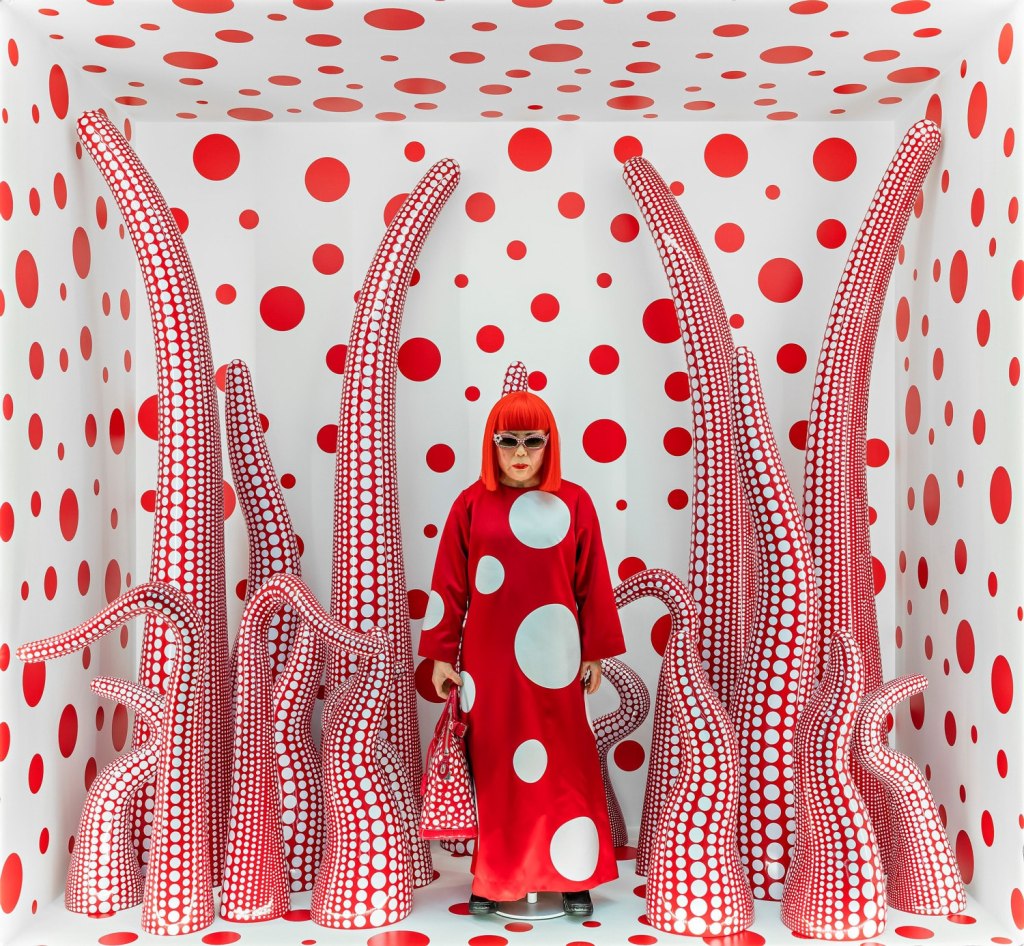
Out of all the up and coming immersive installation artists, there is one who soulfully brings her artistic creations to life using physical time and space.  Yayoi Kusama is one of the most impactful immersive artists of the twenty-first century and continues to do so with her many new ideas and expressions. She claims her installations to be known as “infinity rooms” where she takes her personal experiences of hallucinosis, dissociation, and anxiety to create a physical space where one can submerge themselves in to “get away” from the real world in a safe environment.  Yayoi Kusama is part of the reason as to why immersive installations are so pivotal to the history within contemporary art because as an artist, she has grown and developed over time just as the art world has.  Some of her original works go as far back as 1965 where she first held a “floor show” consisting of just a mirrored room.  Though not being as impactful in earlier years, Yayoi Kusama has mastered her art form by expressing how she struggles with her mentality the most.  This is impactful because as a relevant topic of today, many people are now discovering the struggles of their mental illnesses and speaking up about them.  Kusama is doing this through her art, but also giving many others a chance to be in a safe environment, whether or not they struggle with their mentality like she does.  

Out of all the many new art forms arising in the twenty-first century, I feel as though immersive installations are the most significant.  This rising art movement is significant to the history of the art world due to its involvement with the public, and getting people to feel and dive into the art world a loot more.  This art form is more than just looking at a painting, it helps the viewer live within the work itself as art history has never truly experienced this on such an impactful level before.


Sources

Applin, Jo. Yayoi Kusama: Infinity Mirror Room–Phallis Field. London: Afterall Books, 2012.

Mitchell, Bonnie. “The Immersive Artistic Experience And The Exploitation Of Space,” CAT 2010 London Conference. January 2010, 98–107. https://doi.org/10.14236/ewic/cat2010.11.

Martin, Isabelle, “A Single Particle Among Billions: Yayoi Kusama and the Power of the Minute”. Oswald Research and Creativity Competition. University of Kentucky, 2017. https://uknowledge.uky.edu/oswald/1

Dada VS. Pop Art; Are They as Different as They Seem?

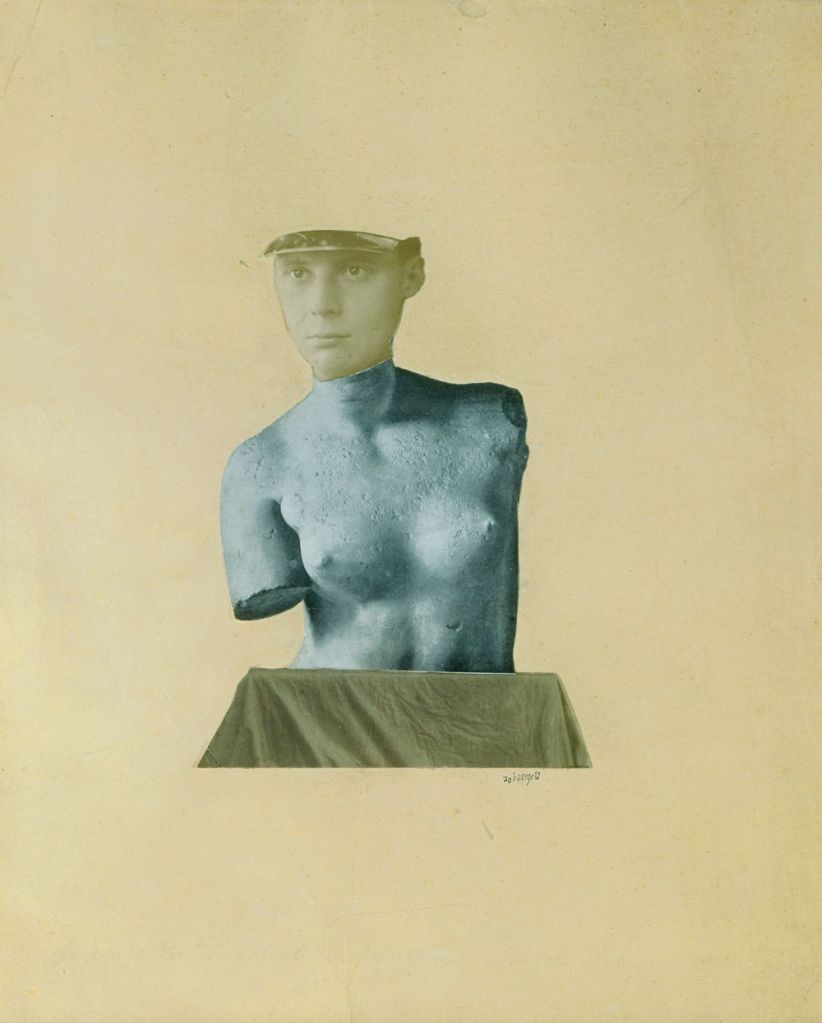
Typische Vertikalklitterung als Darstellung des Dada Baargeld, Johannes Baader, 1920

For years, artists have been creating new artistic styles and movements to break free from the traditional norms the artworld was established on.  Many of which are famously remembered from the nineteenth and twentieth centuries.  Two significant art movements that I have found to be the most interesting to compare are the Dada movement of the early twentieth century, and the Pop Art movement of the later to mid twentieth century.  Dada and Pop Art have more comparisons than one may think however, they are still two different movements formed at different times.  Dada and Pop Art could be seen as different due to the fact that the physical artworks are created from different points in history, and Pop Art did not comply with many of the traditional characteristics of Dada.  However, the two art movements can be seen as similar due to their non-traditional contents and breaking from the artworld’s status quo.   

Dadaism is an art movement that started in 1916 which was carried out due to the post effects World War I had on Europe and its economy.1  While Dada has been widely known for its extreme nature and non-traditional creations, it notoriously lasted until 1923.  Compared to Pop Art, which went on from 1950 to about 1970, came about in America completely through satire and irony.2  Dada took away from the seriousness of art by forming a movement based around the idea that “anything can be art”3 and developed techniques such as ready-mades and collages.  Opposing this, Pop Art which was recognized as, “a mirror of the spectrum of visual communications as well as representative of a constitutive channel (painting),”.4  Due to the creation and purpose behind these movements, their differences still stand out when one is able to narrow down and compare them. 

Oh, Jeff…I Love You, Too…But…, Roy Lichtenstein, 1964

Seeing as though these are two very different art styles, they can also be viewed as similar as well.  Dadaism and Pop Art have many similarities between each other in their non-conformist creations of the traditional art world.  As stated in Richardson’s journal, “Pop art is anti-social without being at all anti-cultural in the overwhelming sense that Dada was,”.5  What the author means by this, is that both of these significant art movements made it a point to base their work solely around rebellion or irony.  Even though Dada took this movement more aggressively against the government, they both added humor and a whimsical energy to the pieces they created; both outside of the art world’s status quo.  Another reason as to why these movements are seen as similar is because they compared social issues on consumerism as well. These two movements were said to be a, “direct result of competitive merchandising,” where at these different points in history, consumerism was a developing issue even though their economies were not in the best shape; causing artists to easily make ready-mades or satirical pieces poking fun at these issues going on in the world. 6 

Overtime the art world has benefitted through various types of distinct art movements that were formed throughout the years.  Many of which, could be seen as derivatives or variations of other movements.  Dada and Pop Art could be seen in this way, seeing as though they have many similarities and differences between each other.  While Dada and Pop Art were both created differently and during different periods of time, they continue to display many similarities to the purpose of the works created through them.   


Sources

Gérard, Durozoi. “Dada in Paris.” History of the Surrealist Movement, The University of Chicago Press (2009). 

Harrison, Sylvia. “Post Modern Assumptions.” Pop Art and the Origins of Post Modernism, Cambridge University Press (2001): 11–34. 

Mancini, Lindsey. In Class Lecture. 

Richardson, John Adkins. “Dada, Camp, and the Mode Called Pop.” The Journal of Aesthetics and Art Criticism 24, no. 4 (1966): 549-58. doi:10.2307/428780. 

Exploring Wadsworth

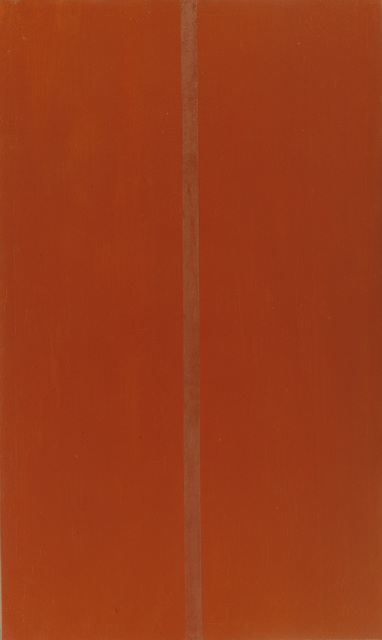
Onement II, Barnett Newman 1948

In my venture throughout the Wadsworth Atheneum Museum of Art, I had gotten to experience the sight of many exhibitions of talented artists from all over.  The museum itself was created in the early 1800s in Hartford, Connecticut and founded by Daniel Wadsworth as one of the first American art patrons.1  The museum itself has further developed over the years incorporating artistic elements of Europe, Asia, the Middle East and more.  The exhibition I visited was known as From Expressionism to Surrealism: Highlights of Modern Art from the Collection.   This exhibition explored artworks from the Post-War time period through the visual representation of American Artists.2  

When walking into the exhibition the viewer enters through a set of glass doors into an expanded layout consisted of three rooms.  Each room consisted of rectangular white walls with a doorway in the center, connected as three horizontal layouts with windows on the left wall.  The first room contained the first set of eight Post-War paintings and sculptures stemming from the effects of World War II.  The painting I was drawn to the most in this room was known as Onement II, created in 1948 by the artist Barnett Newman.3  This painting consisted of a singular, vertical red line across another red painted background.  When reading the description about the painting I have learned that it was created to represent what Newman referred to as a “zip” like a zipper runs down a coat, dividing yet holding the same element together at the same time,  This piece was also created to imply the perfect figure of the human body.4 

As I traveled throughout the gallery, there were a number of art works that were brought to my attention however,  the second one that gained my attention was Stack, created by Kenneth Noland in 1965, seen in the second room against the right-most wall.  The artist created this work by rotating the canvas at forty-five degrees and applying vibrant bands of color that follow the margins of the canvas itself in a v-shaped pattern.  The artist also applied a dot of blue paint in the top right corner of the piece to draw attention away from the rigid composition of the painting.5  I think this piece was an impactful part of the exhibition due to the fact that it had contained the ideal abstract expressionism that the Post-War movement had on American artists during this time period. 

Overall the exhibition, From Expressionism to Surrealism: Highlights of Modern Art from the Collection, was intriguing as well as insightful to the viewer.  What I enjoyed most about this exhibition was the fact that American artists had such a passion for surreal, abstract, and expressionist artworks during the time when the second world war was over.  These works successfully educate the public on the subject matter at hand due to the fact that everyone during this time was starting to find happiness and spread love after the struggles that the war brought.  The bright colors and unique brush strokes brought out a sense of life and movement to each of the pieces.   


Sources

Artnet. “Kenneth Nolan.” Biography, Artnet Worldwide Corporation. 2008. 

Artnet. “Barnett Newman.” Biography, Artnet Worldwide Corporation. 2009. 

Kilkenny, Amy. “History” Wadsworth Atheneum Museum of Art, 2015. https://www.thewadsworth.org/about/history/ 

Jones, Jonathan. “Glimpses of the Sublime.” The Guardian. The Guardian, 16 May 2013. Web.  12 Apr. 2015. 

The Fragmented Portrait

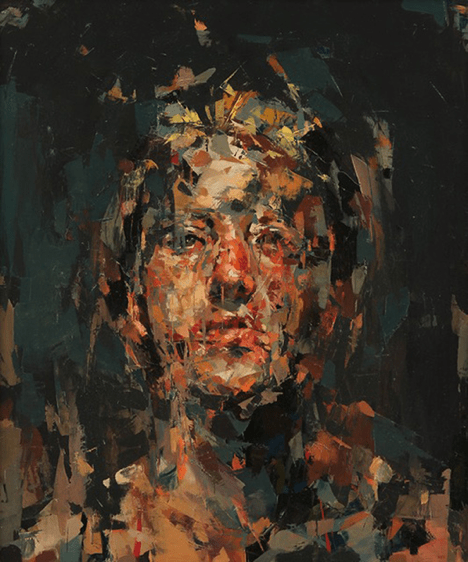
The Fragmented Portrait is a digital exhibition composed of large scale oil paintings that capture and express the ever-changing fragments that accumulate and compose an individual’s identity and personality. The term fragmented has been selected to express the symbolic pieces we carry and accumulate as we age. From birth, we are subjected to influential factors that shape and define who we are today, with works from Kai Samuels-Davis, Ann Gale, and Andrew Salgado, this theme is portrayed through their unique artistic perspectives and concepts. They depict the common man, woman, and minority groups through styles reminiscent of Abstraction, Impressionism, and Expressionism. Each artist contributes two works of art, creating a six-piece collection that uncovers and visualizes how one can be shaped by time, emotion and events. By documenting the accumulations of fragments one gathers throughout their lives, rather than recording one’s solid appearance, The Fragmented Portrait exhibits the multitudes of perceptions, psychology, and emotions of the human race. Continue reading →

Ordinary Moments Represent Extraordinary Change

Henry Ossawa Tanner’s The Banjo Lesson and The Thankful Poor combat the dominant narratives of Western art history by depicting an African-American grandfather and grandson in humane, ordinary moments. The warm depiction of the grandfather reflects the hardships suffered by older generation: slavery, the Civil War, oppression, and racism. While the young grandchild reflects the new America, full of opportunities and advancements, education and a new beginning for all African Americans. Continue reading →

The Impact of the Cube

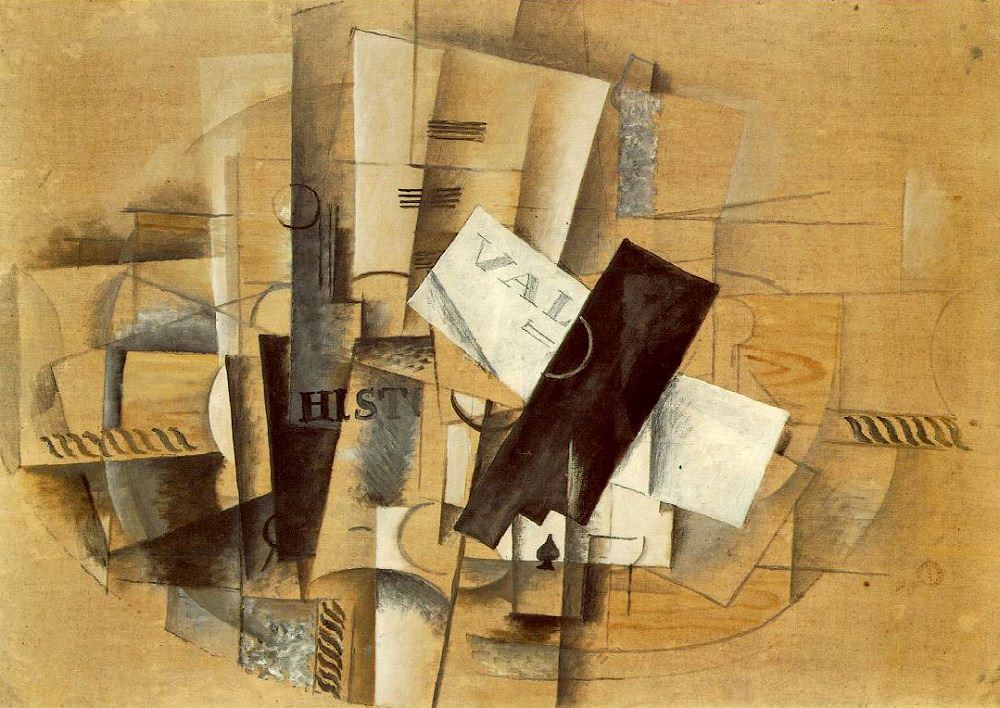
Cubism is a very important artistic style, and one of the most impactful art movements of the early twentieth century. Its unique visual style and abstract ideas inspired a plethora of future art movements such as Constructivism, Dadaism, De Stijl, Futurism, and many more. De Stijl artists in particular drew from Cubism’s adoption of pure abstraction, removal of any and all identifiable subject matter, and its mysticism about ideal geometric shapes. Continue reading →

Eastern Connecticut State University “Pulls” Out Some Good Art

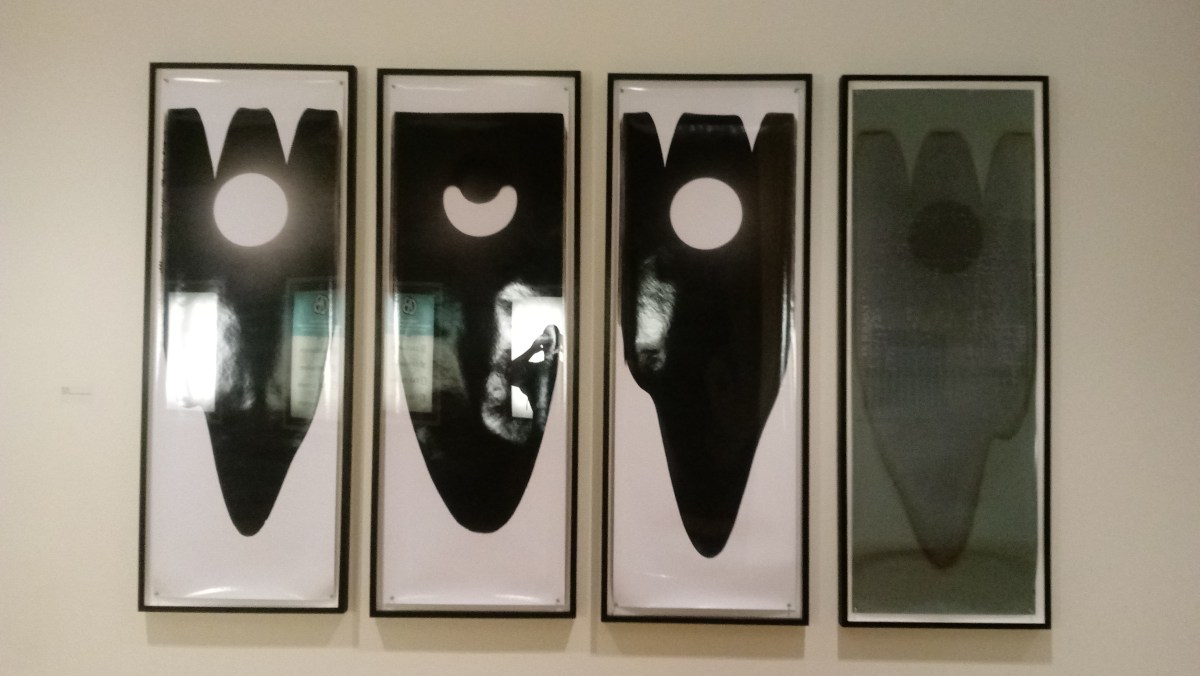
Pulls is quite a unique work by Ellen Carey who is a known abstract photographer. The shapes in this piece don’t really seem to represent any real-world object or being. Instead it seems to give off an energy similar to that of a Rorschach test image. The psychological nature of humans is to find something representational or familiar so that they may relate to the image or feel comfortable looking at it. Continue reading →

Sunday Morning’s Success

Charles Schulz is the cartoonist behind the iconic Charlie Brown and Snoopy from the comic strip Peanuts. From his childhood spent reading the funnies with this father every Sunday morning, Schulz’s love for comics remained steady throughout every hardship in his life, including death and war. From the miserable critter we know as Charlie Brown, who echoes a little bit of what we all have in us, and characters who were inspired from his own life; Schulz’s accomplished his childhood dream while leaving an unforgettable mark as a cartoonist on the world of illustration. Continue reading →