Invisible No More: David Wojnarowicz’s Fight for LGBTQ+ Visibility

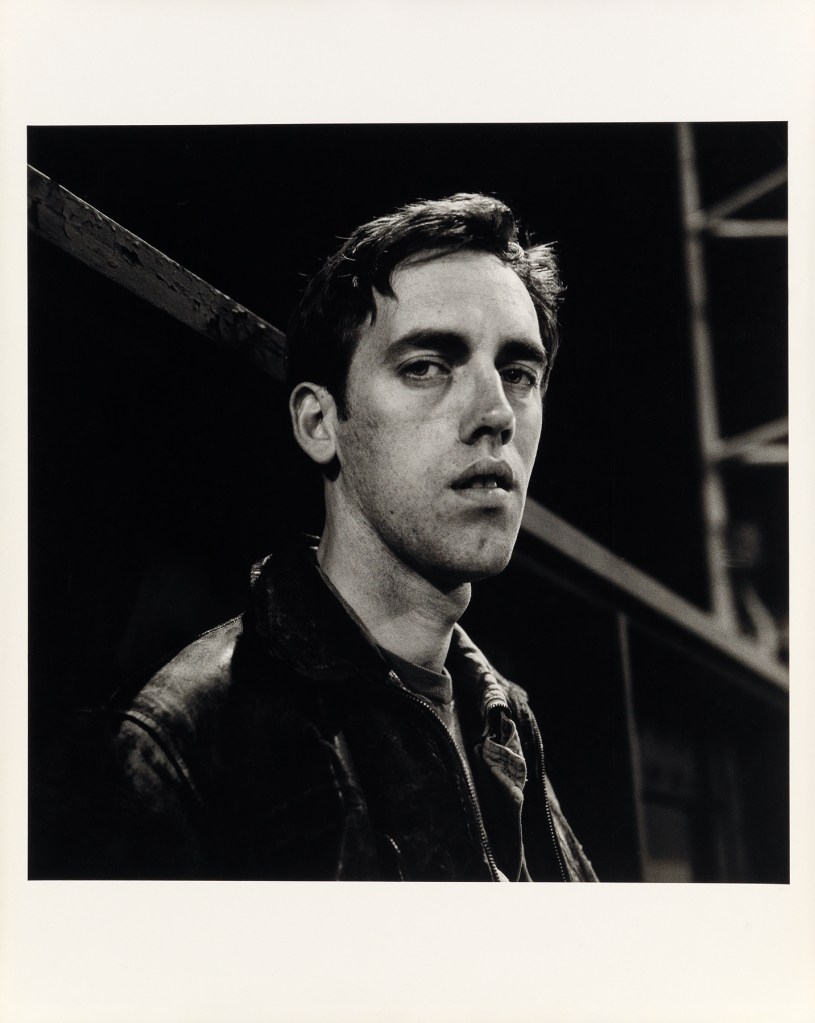
Peter Hujar. David Wojnarowicz: Manhattan-Night (III), 1985.
Silver Print; 14.5 x 14.8 in. (36.8 x 37.5 cm).
Image by Artnet.com
.

Throughout Western history, especially in the United States, members of the LGBTQ+ communities have faced discrimination. Speaking specifically on the homosexual subsection of the community, people have historically been pressured to keep their sexuality hidden out of fear of public ridicule and physical violence. The fight against LGBTQ+ oppression began in 1924, when Henry Gerber formed the United State’s first documented gay rights organization. Over time this resistance grew, becoming especially prominent in the art world. One artist known for his portrayal of the gay community was David Wojnarowicz. Through a variety of media and artwork, David Wojnarowicz fought to increase visibility of the gay community and voice the issues they faced that society often ignored.

David Wojnarowicz. Untitled (One Day This Kid…), 1990.
Photostat; 29.8 × 40.1in. (75.7 × 101.9cm). Whitney Collection, New York City, New York.
Image by Whitney.org.

Born in 1954, David Wojnarowicz was a gay American artist and AIDS activist who lived in New York during the AIDS epidemic of the 1980s. Throughout his career, he used painting, performance, film, and photography to draw attention to civil rights and gay identity within American popular culture. Through his art, Wojnarowicz expressed his fear, anger, and frustration by drawing attention to the homophobia, stigmatization, and conservatism that plagued society. In doing so, he gave voice to the marginalized individuals of his community. To accomplish this, many of Wojnarowicz’s projects were based on his own experiences or those of other LGBTQ+ individuals he met during his travels. A particularly strong piece that accomplishes this is Untitled (One Day This Kid…). Created in 1990 and last exhibited in the Whitney Museum in 2018, this piece consists of a black-and-white self-portrait of the artist as a child, surrounded by text. Juxtaposed with the smiling face, the text describes the persecution he would face in his adulthood from his family, church, school, government, and medical communities just for being gay. He describes how the child would be,“faced with electro-shock, drugs, and conditioning therapies,” as well as being, “subject to loss of home, civil rights, jobs, and all conceivable freedoms,” all because, “he discovers he desires to place his naked body on the naked body of another boy.” By combining text and image, the artist makes visible the narrative that he, and many other gay individuals, lived through. In a time where the struggles of the gay community were obscured from the public eye, he stood his ground and made his story heard. The viewer is confronted by the reality that all these terrible acts have occurred to innocent people, including children, because society chose to criminalize life as a gay person—a subject matter that was severely under represented in the art community out of fear of hostility. Wojnarowicz continued to make the struggles of the gay community visible in his photo series titled Room 1423.

David Wojnarowicz. Room 1423, 1987.
Gelatin silver prints; 30.5 x 24.5in. (77.5 x 62.2cm) each.
Images by Americamagazine.org.

Photographed on November 26, 1987, Room 1423 depicts Wojnarowicz’s close-friend and partner Peter Hujar moments after death. Wojnarowicz was in the hospital room with Hujar  when he died from AIDS related complications. Shortly following his passing, Wojnarowicz asked everyone to leave the room so he could photograph Hujar one final time. The three emotional shots he took of Hujar’s head, hand, and feet make up the images in this series. In the first photo, Hujar’s dark lifeless eyes and ajar mouth make for an emotional and haunting image. In another shot, his bony hand rests upon the hospital bed sheets. Lastly, his worn feet can be seen sticking out from under the blanket. Through these images, Wojnarowicz confronts the viewer with the macabre loss of life many faced during the AIDS epidemic. Without words he captures pain and heartbreak, showcasing the humanity and suffering of the gay community to a society that tried to dehumanize them, especially those affected by AIDS. Much like Untitled (One Day This Kid…), viewers are presented with an aspect of gay life frequently hidden from the eye of the public.

Wojnarowicz’s activism through art continued until 1992 when he too passed away from AIDS-related complications.

Throughout his life, Wojnarowicz was continuously pressured into silence by the family that surrounded him, the media that erased him, and the society that fought against him. Though his life was tragically cut short, the efforts he made as an artist and activist helped pave the way for future LGBTQ+ artists and the continued growth of representation in art history.

______________________________________________________________________________

Sources:

“David Wojnarowicz.” David Wojnarowicz Biography – David Wojnarowicz on artnet. Accessed April 8, 2020. http://www.artnet.com/artists/david-wojnarowicz/biography.

“David Wojnarowicz.” Visual AIDS. Accessed April 10, 2020. https://visualaids.org/artists/david-wojnarowicz

“LGBTQ Activism: The Henry Gerber House, Chicago, IL (U.S. National Park Service).” National Parks Service. U.S. Department of the Interior. Accessed April 9, 2020. https://www.nps.gov/articles/lgbtq-activism-henry-gerber-house-chicago-il.htm.

Smallwood, Christine. “The Rage and Tenderness of David Wojnarowicz’s Art.” The New York Times. The New York Times, September 7, 2018. Accessed April 10, 2020. https://www.nytimes.com/2018/09/07/magazine/the-rage-and-tenderness-of-david-wojnarowiczs-art.html.

Untitled (One Day This Kid…).” Whitney Museum of American Art. Accessed April 8, 2020. https://whitney.org/collection/works/16431.
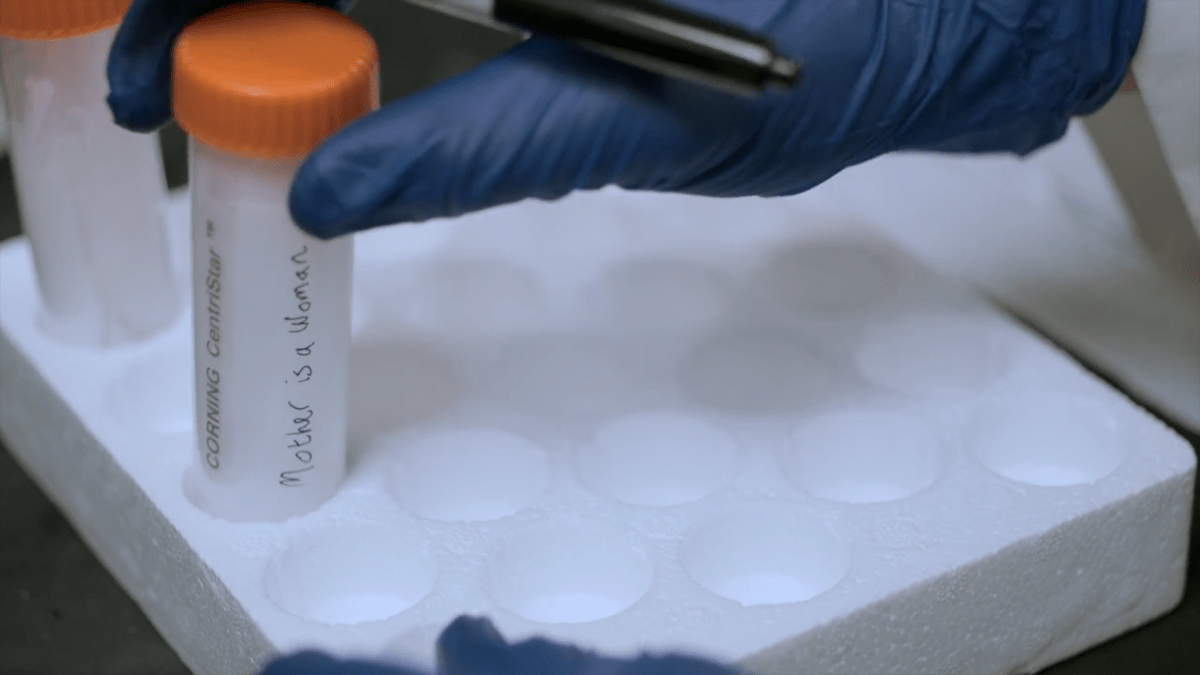

Jes Fan’s “Mother is a Woman” (2018)

“Beyond a beauty cream, Mother is a Woman invites you to rethink kinship through the pores of your skin” – Jes Fan

When the body and binary are taken out what are we left with? Jes Fan thinks of that often when creating his work. Being queer-identifying and a minority in the US, he is no stranger to mixing the topics of gender, identity, and race. Taking biological materials from their context within the body, Fan incorporates science to figure out the essence of their meaning and lends a completely new one for his audience. In Mother is a Woman, the Hong Kong-born andBrooklyn based artist went back to his home country to get his samples for his next piece from his mother.

 Jes Fan, Mother is a Woman, 2018, Video, HD, Color, 4:44.

“There’s nothing weirder than holding your mom’s excretions in your hand…”

Jes Fan, Mother is a Woman, 2018, Video, HD, Color, 4:44.

Fan’s intent was to make a cream with the estrogen extracted from his post-menopausal mother.  When he gets back to the US he takes the samples to a lab and videographer Asa Westcott document the process and the participants that later try on the cream. The expression on each participant ranges from emotionless to smiling as they rub the cream into their skin.

There’s something strangely intimate about this whole piece. People take hormones for various reasons but there’s never a question of how it’s made or where it comes from. We share a relationship with the ones around us, our family, but we don’t take into account how they shape us and are a part of us. It made me evaluate how I view womanhood and relations that I had with my own mother. We’re close and I have a closeness with her but that’s not the same in everyone else’s case. And for that, I feel thankful.

Sources

Fan, Jes. “Mother is a Woman.” Vimeo, April 8, 2018. https://vimeo.com/263716151.

“Jes Fan.” Empty Gallery. Accessed December 18, 2019. https://emptygallery.com/artists/jes-fan/.

“Jes Fan In Flux.” Art21. Accessed December 18, 2019. https://art21.org/watch/new-york-close-up/jes-fan-in-flux/.

America’s Eyes

It’s already a well-known fact that the art world is heavily saturated with predominantly white male artists. Other artists of different ethnic backgrounds, however, tend to struggle with the representation, of not only with their art but in their daily lives. It’s a struggle to even be considered a human being by the general public as it is, so when I saw the photographer Gordon Parks presented in class my eyes lit up. Parks’ work really challenged the narrative placed on black Americans. Parks highlighted the will and determination to pursue the American Dream through the eyes of Black people despite years of disenfranchisement.

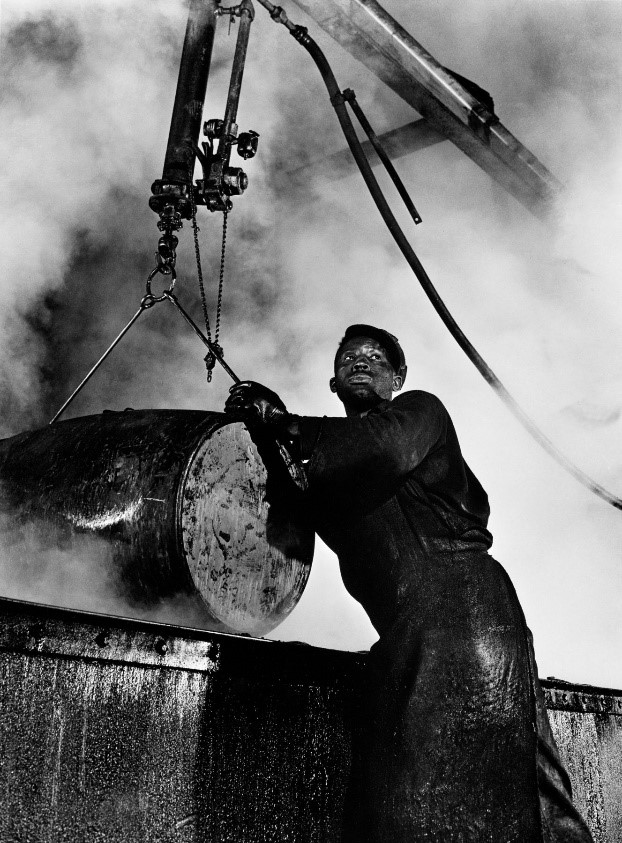
A white and black smoke. Man in cap is leaning against a barrel.
Gordon Parks, Grease Plant Worker, Pittsburgh, Pennsylvania, 1944

Grease Plant Worker features a young Black gentleman in a factory that is glancing into the distance, beyond the photographer. His body is leaning against a suspended barrel that he’s guiding. This body language promotes strength in the literal sense since he’s physically moving the object, but also through the metaphorical push the gentleman is making for his life: forward. The use of the man’s stance and the subject matter of where he worked effectively fought the narrative perpetuated by the media of Blacks being dangerous and lazy.

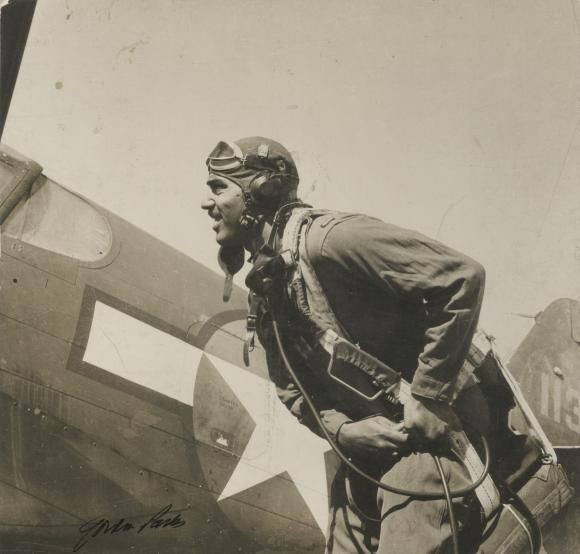
A man standing near a plane
Gordon Parks, Lt. George Knox. 332nd Fighter Group training at Selfridge Field, Michigan, October 1943 

Further combating the common misconceptions of the time, Parks photographed a dynamic shot of George Knox II, a black American pilot that pushed boundaries and defied the rules that shaped the social structure of America at that time. In the photograph, Knox is strapped in his gear preparing himself for his training with his team. This smiling serviceman demonstrates that he’s willing to sacrifice for the country alongside his fellow men to protect his place of birth, although the same country does not treat him as an equal.

Photography and other visual depictions of the 1940s usually featured the slow climb of white America as the face of the struggles to prosperity. But they weren’t the only community affected by the fall of the economy and the efforts of the other Americans restoring the country back to its glory. The accomplishments of the country were wildly inaccurate towards the minority groups, especially Black folk. Through his photographs, Parks shows that he and the black community residing in the melting pot that is the United States are strong, with goals, determination, and are more than the racist prejudice constantly presented.

Sources

Courage, Richard A. “Re-Presenting Racial Reality: Chicago’s New (Media) Negro Artists of the Depression Era.” Technoetic Arts: A Journal of Speculative Research 10, no. 2/3 (December 2012): 309–18. doi:10.1386/tear.10.2-3.309_1.

“George Levi Knox, III’s Biography.” The HistoryMakers. Accessed December 1, 2019. https://www.thehistorymakers.org/biography/george-levi-knox-iii.

Mitchell, Kristina E., Amanda Martin-Hamon, and Elissa Anderson. “A Choice of Weapons: Photographs of Gordon Parks.” Art Education 55, no. 2 (March 2002): 25–32. doi:10.2307/3193987.

“The Gordon Parks Foundation.” Gordon Parks Foundation. Accessed December 1, 2019. http://www.gordonparksfoundation.org/.

Ordinary Moments Represent Extraordinary Change

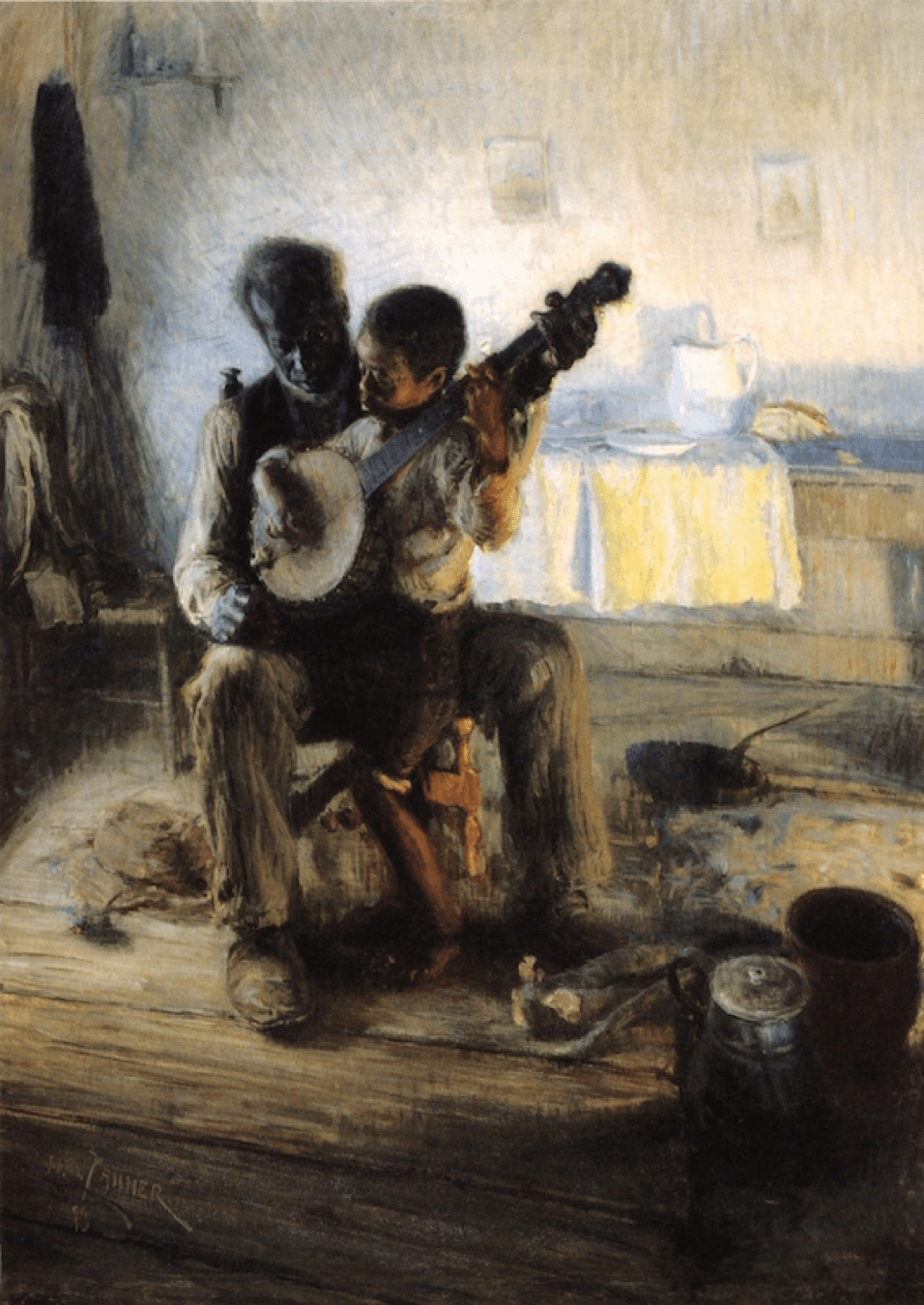
Henry Ossawa Tanner’s The Banjo Lesson and The Thankful Poor combat the dominant narratives of Western art history by depicting an African-American grandfather and grandson in humane, ordinary moments. The warm depiction of the grandfather reflects the hardships suffered by older generation: slavery, the Civil War, oppression, and racism. While the young grandchild reflects the new America, full of opportunities and advancements, education and a new beginning for all African Americans. Continue reading →

The Impact of the Cube

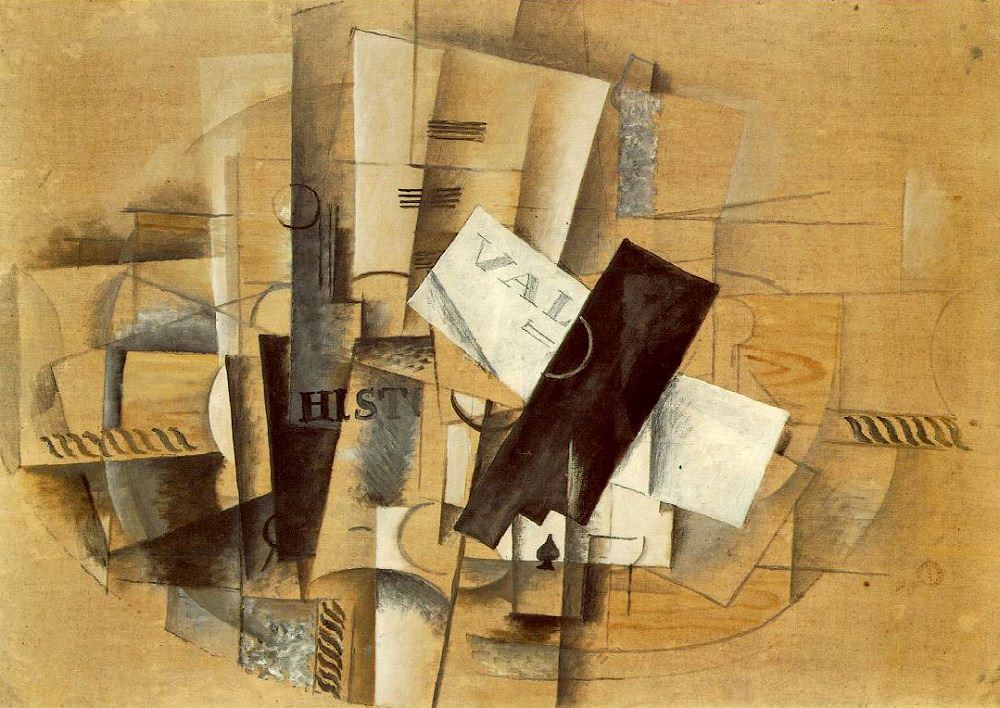
Cubism is a very important artistic style, and one of the most impactful art movements of the early twentieth century. Its unique visual style and abstract ideas inspired a plethora of future art movements such as Constructivism, Dadaism, De Stijl, Futurism, and many more. De Stijl artists in particular drew from Cubism’s adoption of pure abstraction, removal of any and all identifiable subject matter, and its mysticism about ideal geometric shapes. Continue reading →

Eastern Connecticut State University “Pulls” Out Some Good Art

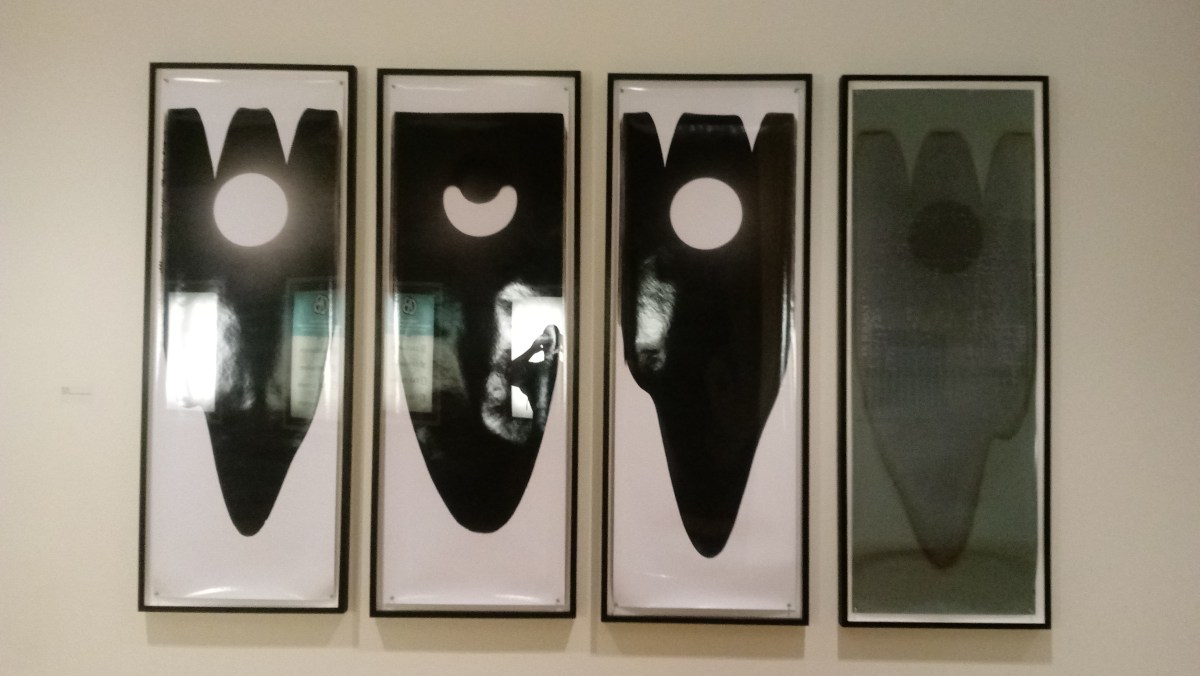
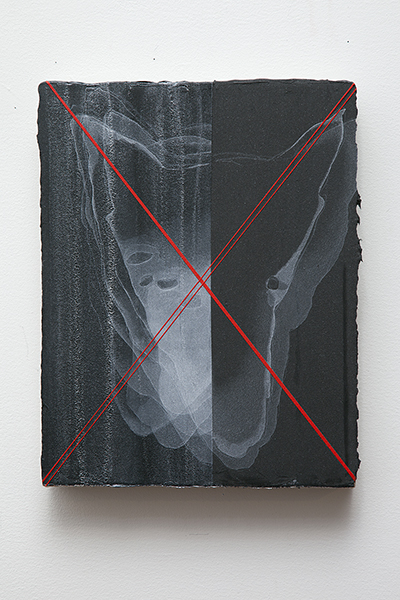
Pulls is quite a unique work by Ellen Carey who is a known abstract photographer. The shapes in this piece don’t really seem to represent any real-world object or being. Instead it seems to give off an energy similar to that of a Rorschach test image. The psychological nature of humans is to find something representational or familiar so that they may relate to the image or feel comfortable looking at it. Continue reading →

Sunday Morning’s Success

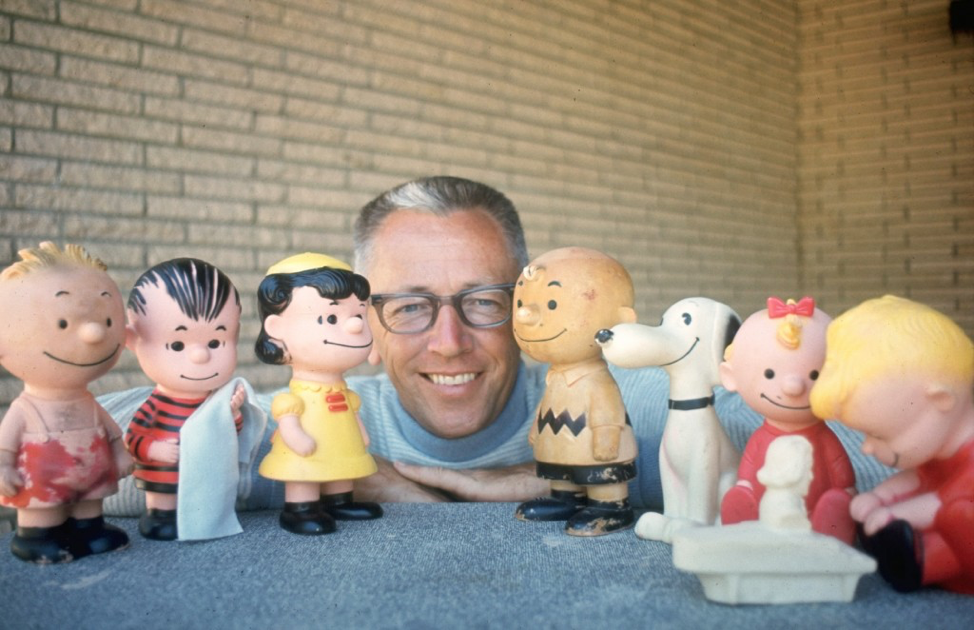
Charles Schulz is the cartoonist behind the iconic Charlie Brown and Snoopy from the comic strip Peanuts. From his childhood spent reading the funnies with this father every Sunday morning, Schulz’s love for comics remained steady throughout every hardship in his life, including death and war. From the miserable critter we know as Charlie Brown, who echoes a little bit of what we all have in us, and characters who were inspired from his own life; Schulz’s accomplished his childhood dream while leaving an unforgettable mark as a cartoonist on the world of illustration. Continue reading →

Contemporary Distractions

The first multimedia device in the form of an interactive theater experience was invented in 1957, according to the Virtual Reality Society. In 1968, a head-mounted display attached to a computer was introduced that enabled the wearer to see a virtual world. However, it was extremely heavy and had to be attached to a suspension device to help support its immense weight. Over the past few years, a new wave of interest in Virtual Reality (VR) has formed. It began with the design of the first prototype of the Oculus Rift in 2010, followed by next-gen video game developer Valve’s introduction of low-persistence displays in 2013. In recent years, advancements in the field have pushed VR even further. By wearing a VR headset and holding two free controllers, artists have begun to digitally paint, sculpt, and illustrate in Virtual Reality. Because of this seemingly endless potential, VR art has become a rising art movement that more and more artists are beginning to gravitate to. With its immersive and limitless possibilities, VR art has the potential to change the trajectory of the contemporary digital arts. Continue reading →

Yuko Shimizu: Talented Trailblazer

Yuko Shimizu is an acclaimed Japanese-American illustrator who finds inspiration from both comic books and traditional Japanese woodblock prints in the creation of her own unique style. She is both a successful modern artist as well as a successful business women thanks to over three decades of hard work and dedication.

Before becoming the talented illustrator she is today, Shimizu worked in personal relations for a large Japanese corporation for over a decade. She eventually became sick of the mundane corporate atmosphere and also began to feel trapped without much upward mobility in her position. Combined with her growing fear that she would regret not trying to do something more with her life, Shimizu quit her PR job to move halfway across the world to follow her dream of becoming an illustrator. Continue reading →