Nick Cave’s Soundsuit (2006)

Walking into the Yale Art Gallery, Nick Cave’s Soundsuit (2006) is not a piece you would expect to see. Its tall stature is intimidating and a little frightening at first glance. The sculpture is very tall and almost looks like a monster that is covered head to toe in a mixture of wood, paint, and paper that looks like fringe on the arms and legs. It stands out amongst the other artworks in the room.
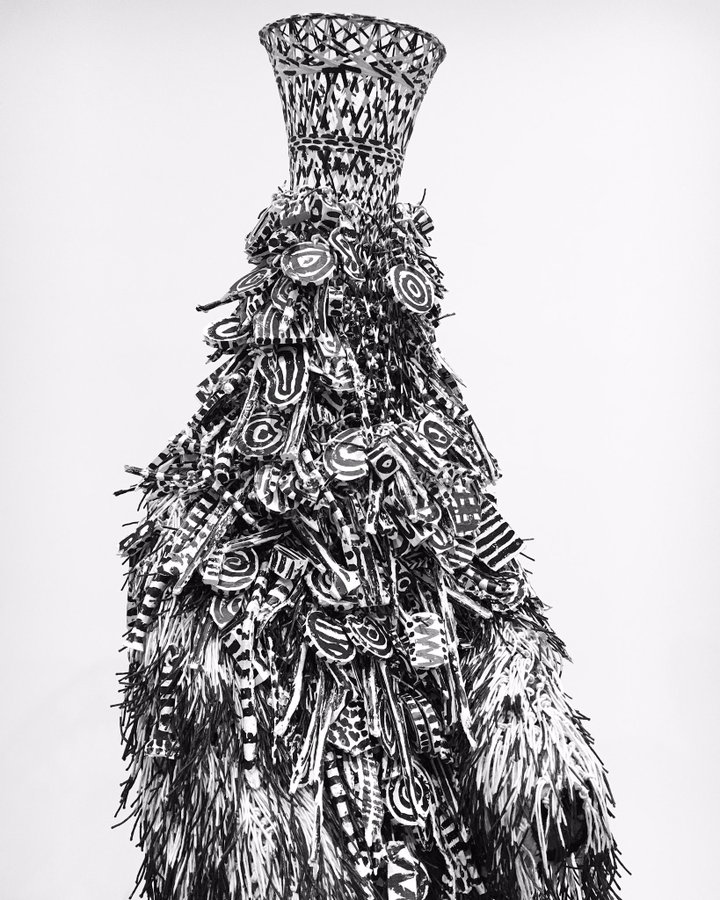
Nick Cave. Soundsuit, 2006. Paint, paper, cotton, wood, fabricated fiberglass; 90 × 27 × 19 in.”. American Art Gallery at Yale University Art Gallery, New Haven, CT. Photo by @ronnie_rysz.

Once reading the description of Cave’s process for the piece, it is clear that he intended for the sculpture to be unsettling. As a gay Black man, he knew that he would be seen as a threat in society. He says, “How do I exist in a place that sees me as a threat?” In response to this feeling, Cave wanted to create a piece that could be worn as protection or as a performance piece. Also, perhaps Cave wanted viewers to have a visual representation of what being a Black man in America feels like.

Sources

Cave, Nick. Soundsuit. 2006. Paint, paper, cotton, wood, fabricated fiberglass; 90 × 27 × 19 in.” Yale University Art Gallery, New Haven, CT. https://twitter.com/ronnie_rysz/status/897276223658840064
Responding Jason Stanley’s “Titus Kaphar,” 2019

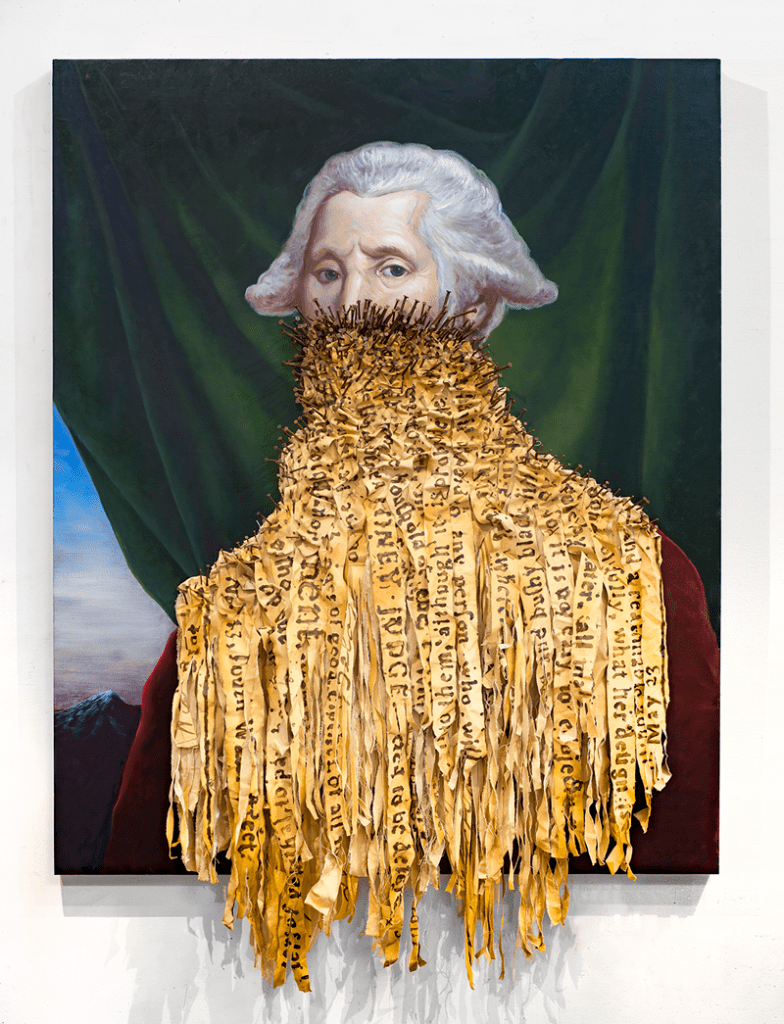
In this interview with Bomb Magazine, Titus Kaphar explains that he wants to bring attention to Black historical figures who are left out of discussions of American history. In one of Kaphar’s pieces named Absconded from the Household of the President of the United States (2016), there are multiple rusted nails tacked into a portrait of George Washington. The nails are all holding onto shredded pieces of paper with names of all the enslaved people that Washington owned. This piece calls out the fact that Americans credit George Washington for what he did for the country as the first U.S. President, while ignoring that the United States was built off the backs of enslaved people.

Titus Kaphar. Absconded from the Household of the President of the United States, 2016. Oil, canvas, and rusted nails on canvas; 60″ x 48″. Building a Legacy: Chrysler Collects for the Future, Norfolk, VA. Image by Kaphar Studio. Photo by Jeremy Lawson Studio.

Imperialist countries like the United States often like to mask the shame of its past. George Washington and multiple other Founding Fathers owned slaves. This is proved by states like Texas that are now trying to suppress the teaching of slavery and other horrific events in American history. I remember that I didn’t learn that the early presidents and other famous American figures owned slaves until I was in high school. Art like Titus’ is important because it shows how white-washed American history is, and how historical BIPOC figures are overlooked.

Sources

Titus Kaphar. Absconded from the Household of the President of the United States. 2016. Oil, canvas, and rusted nails on canvas, 60″ x 48″. Chrysler Museum of Art, Norfolk, VA.

https://www.kapharstudio.com/absconded-from-the-household-of-the-president-of-the-united-states-2016/

Azita Moradkhani’s “The Shah (Victorious Secrets),” 2019

The exhibition titled Our tears are sweet, our laughter venomous: Fourteen Iranian-American Artists was displayed in the Art Gallery at Eastern Connecticut State University from August 23rd to October 8th, 2021. The goal of this exhibition was to challenge the stereotypical portrayal of Iran that the media portrays. I believe the artwork in this exhibition achieved this goal by delving into deeper topics and issues like women’s rights and body image. 

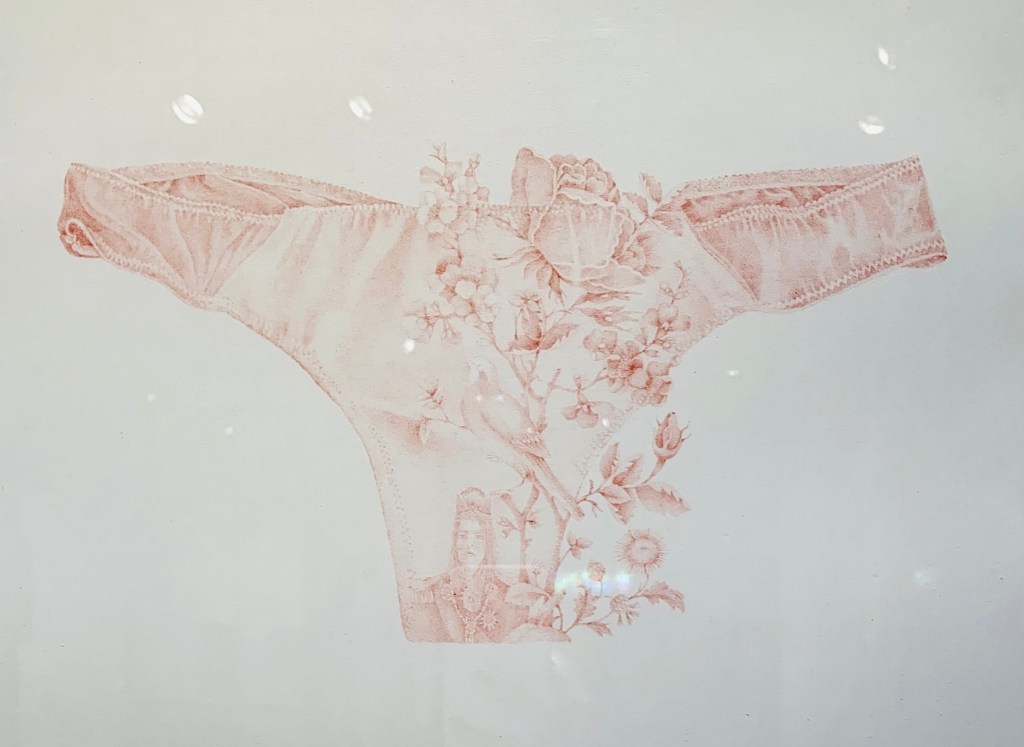
Azita Moradkhani. The Shah (Victorious Secrets), 2019. Colored pencils; 19 x 24 in. Eastern Connecticut State University’s Art Gallery, Willimantic, CT. Photo by Olivia Wronka.

The first piece that I observed upon entering the gallery was The Shah (Victorious Secrets) by Azita Moradkhani. My initial reaction when I saw this piece was that it was bland. Once I got closer I could see all the beautiful fine detail. Even viewing it close-up the color is extremely light and delicate. However, I think this lightness contributes to the fact that lingerie is a delicate piece of clothing. I was attracted to this artwork for its beautiful fine detail. I enjoy the fact that it is somewhat hard to make out, especially from a distance. Once you get closer, it is then that the peace reveals itself. I was also attracted to the pastel pink color and my eye was drawn to the vertical midline of the work where all the various elements are placed. 

I believe this work has to do with female femininity and body expression. According to the booklet the artist was inspired by her experience walking into a Victoria’s Secret for the first time. This work brings me feelings of peace and femininity. The lingerie, floral elements, and bird all bring out these feelings for me. The delicate shading gives an excepting atmosphere which makes me feel like I should embrace my femininity and come to peace with my body’s imperfections. Imperfections are normal and natural. Overall, this work reminds me that I should love myself and my feminine characteristics even if it is seen as a weakness by society.

Sources

Wintner, Julia. Our Tears Are Sweet, Our Laughter Venomous: Fourteen Iranian-American Artists. Willimantic, CT: The Art Gallery Curatorial Programs, 2021. 

Jacquelyn Gendreau’s “Palm Oil Demand,” 2020

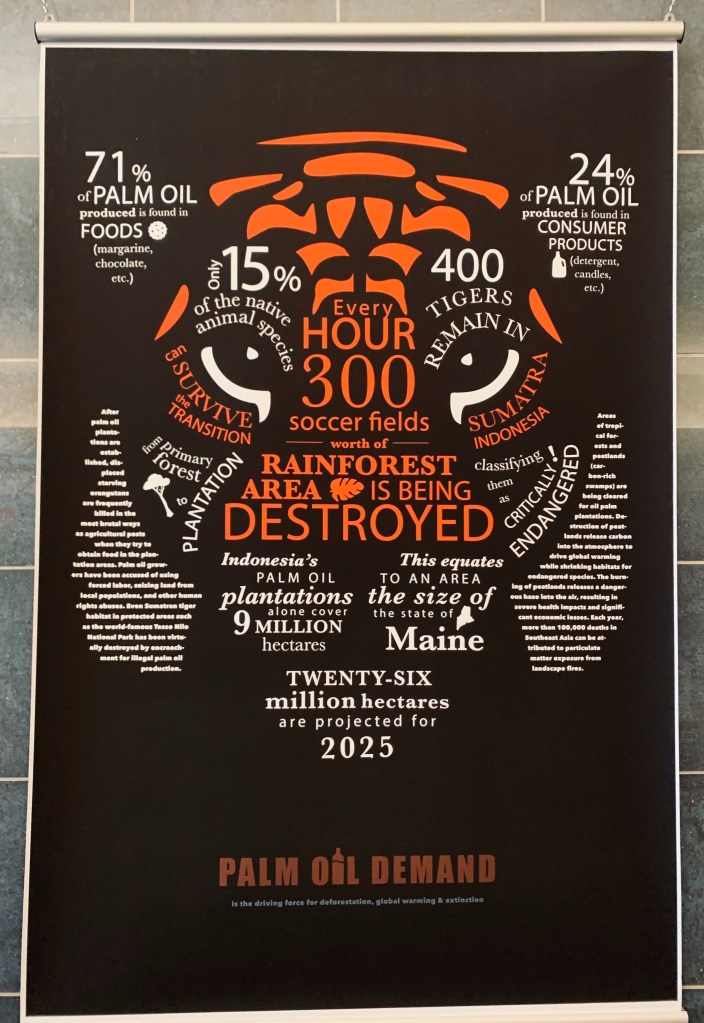
Jacquelyn Gendreau. Palm Oil Demand, 2020. Digital Print; 36″ x 54″. J. Eugene Smith Library, Willimantic, CT. Photo by Olivia Wronka.

Palm Oil Demand by Jacquelyn Gendreau is a digital print that uses typography to form the image of a tiger. The print uses white and orange text on top of a black background. The sections of the type are arranged in shapes that make up the different parts of the tiger. The artist also uses drawn elements to create the tiger’s stripes on the forehead and outline of the eyes. The motive of this work is to bring awareness to the environmentally destructive nature of the demand for palm oil. The text used in the work presents the viewer with facts and statistics about palm oil production and demand. The artist informs the viewer that palm oil is found in an array of everyday consumer products and foods creating a high demand. The production of this oil drives deforestation, global warming, and extinction. In the center of the tigers face, Gendreau states the alarming statistic that, “Every hour 300 soccer fields worth of rainforest area is being destroyed.” This statistic captured my attention and after viewing this piece of artwork, it makes me think about how many products I consume that use palm oil and how my consumer practices are negatively affecting wildlife like tigers. It is sad to think humans continue to be so destructive of the planet we inhabit alongside beautiful creatures like tigers. It’s important to be conscious of our effects on the planet and this artwork reminds the viewer that even consuming simple things like a chocolate bar or bottle of detergent drives this detrimental demand.  

Jes Fan’s “Mother is a Woman” (2018)

“Beyond a beauty cream, Mother is a Woman invites you to rethink kinship through the pores of your skin” – Jes Fan

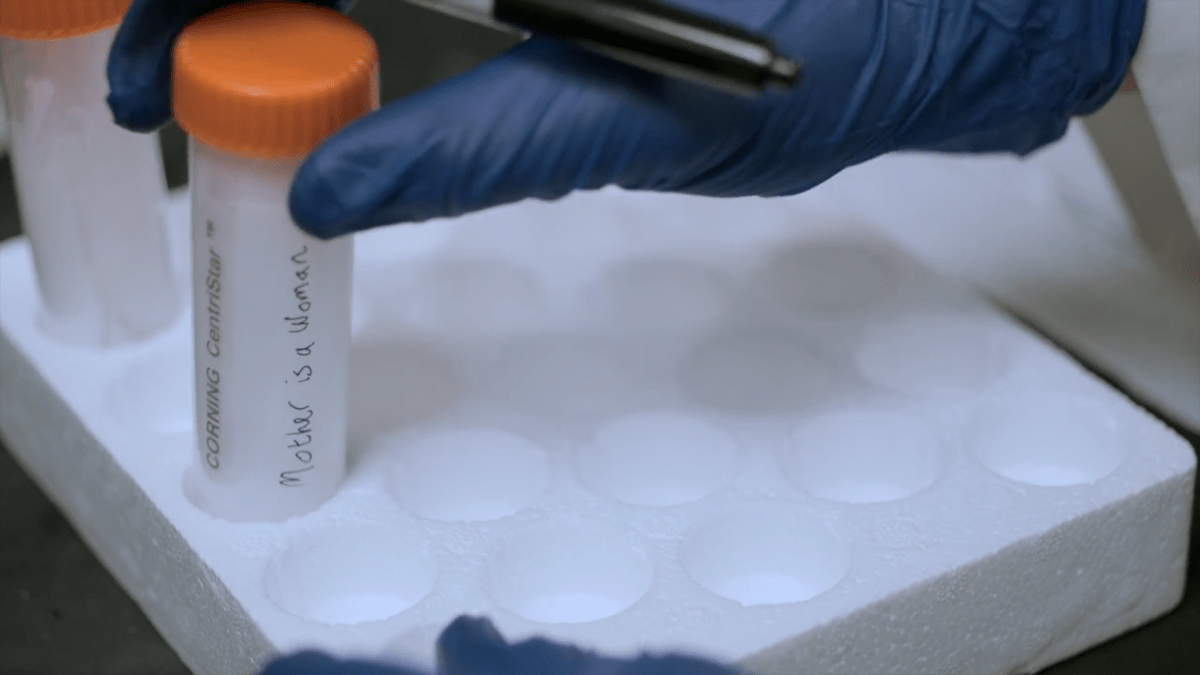
When the body and binary are taken out what are we left with? Jes Fan thinks of that often when creating his work. Being queer-identifying and a minority in the US, he is no stranger to mixing the topics of gender, identity, and race. Taking biological materials from their context within the body, Fan incorporates science to figure out the essence of their meaning and lends a completely new one for his audience. In Mother is a Woman, the Hong Kong-born andBrooklyn based artist went back to his home country to get his samples for his next piece from his mother.

 Jes Fan, Mother is a Woman, 2018, Video, HD, Color, 4:44.

“There’s nothing weirder than holding your mom’s excretions in your hand…”

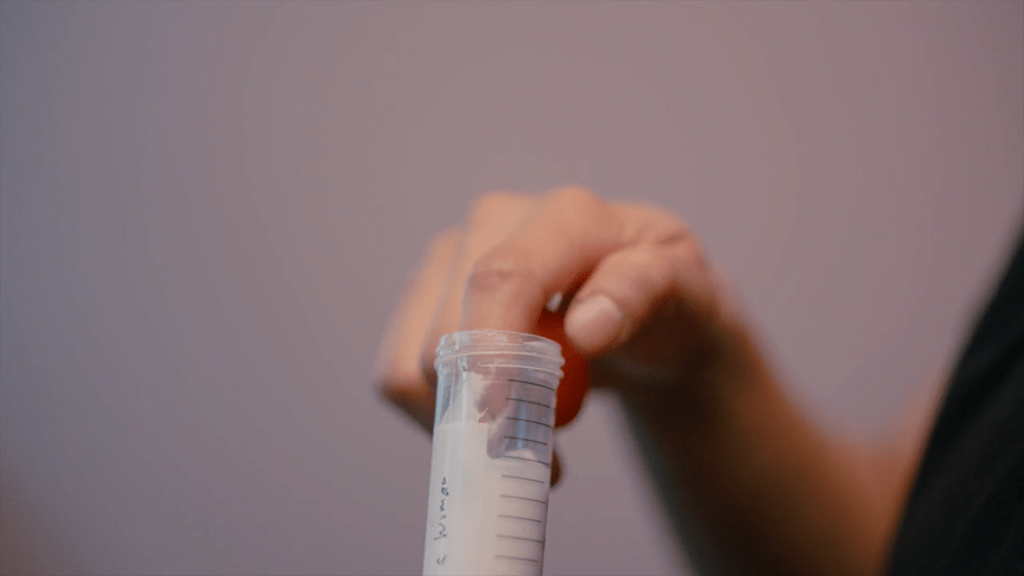
Jes Fan, Mother is a Woman, 2018, Video, HD, Color, 4:44.

Fan’s intent was to make a cream with the estrogen extracted from his post-menopausal mother.  When he gets back to the US he takes the samples to a lab and videographer Asa Westcott document the process and the participants that later try on the cream. The expression on each participant ranges from emotionless to smiling as they rub the cream into their skin.

There’s something strangely intimate about this whole piece. People take hormones for various reasons but there’s never a question of how it’s made or where it comes from. We share a relationship with the ones around us, our family, but we don’t take into account how they shape us and are a part of us. It made me evaluate how I view womanhood and relations that I had with my own mother. We’re close and I have a closeness with her but that’s not the same in everyone else’s case. And for that, I feel thankful.

Sources

Fan, Jes. “Mother is a Woman.” Vimeo, April 8, 2018. https://vimeo.com/263716151.

“Jes Fan.” Empty Gallery. Accessed December 18, 2019. https://emptygallery.com/artists/jes-fan/.

“Jes Fan In Flux.” Art21. Accessed December 18, 2019. https://art21.org/watch/new-york-close-up/jes-fan-in-flux/.

Andy Warhol’s “Early Colored Jackie” (1964)

Early Colored Jackie

Andy Warhol. Early Colored Jackie, 1964. Silkscreen ink on synthetic polymer paint on canvas; 40 x 40 in. Wadsworth Atheneum, Hartford, CT. Photo by Wadsworth Atheneum Collection

This work, titled Early Colored Jackie, is displayed in the Wadsworth Atheneum in Hartford, Connecticut. Warhol created this piece as a silkscreen print on synthetic polymer paint on canvas. As in typical Warhol fashion, he used blocks of bright, unrealistic colors to form the image of Jacqueline Kennedy. The light pink skin tone stands out from the dark blue background, while the bold red lipstick and seafoam green eyeshadow add pops of color to her face. The silkscreen print is taken from an official White House photograph snapped before the assassination of her husband, John F. Kennedy. It is printed in black ink on top of the colorful paint on the canvas. The photo used is cropped in close so it only includes the headshot of Jackie with a blank background.

Warhol was a pioneer of the pop art movement in which this piece was a part of. Jackie was a sign of royalty and glamour in the United States, which makes this piece relatable to the Marilynn Monroe silkscreen that Warhol is well-known for. Jackie was an icon through both her style and behavior for the American people and was one of the first First Lady’s to give more importance to her role as wife of the president. Warhol found inspiration for his subjects in celebrities as well as tragedy or death. This piece was made in 1964, about a year after JFK’s death. The Kennedy family as well as the country was still grieving. It is ironic that Warhol would have chosen a picture of Jackie smiling during such a trying time.


Sources

“Early Colored Jackie.” Wadsworth Atheneum Collection. Accessed December 18, 2019. http://argus.wadsworthatheneum.org/Wadsworth_Atheneum_ArgusNet/Portal/public.aspx?lala=en-US.

Sooke, Alastair. “Culture – Jackie Kennedy: Andy Warhol’s Pop Saint.” BBC. BBC, April 18, 2014. http://www.bbc.com/culture/story/20140418-jackie-warhols-pop-saint.

Artificial Intelligence or Intelligent Artifice?

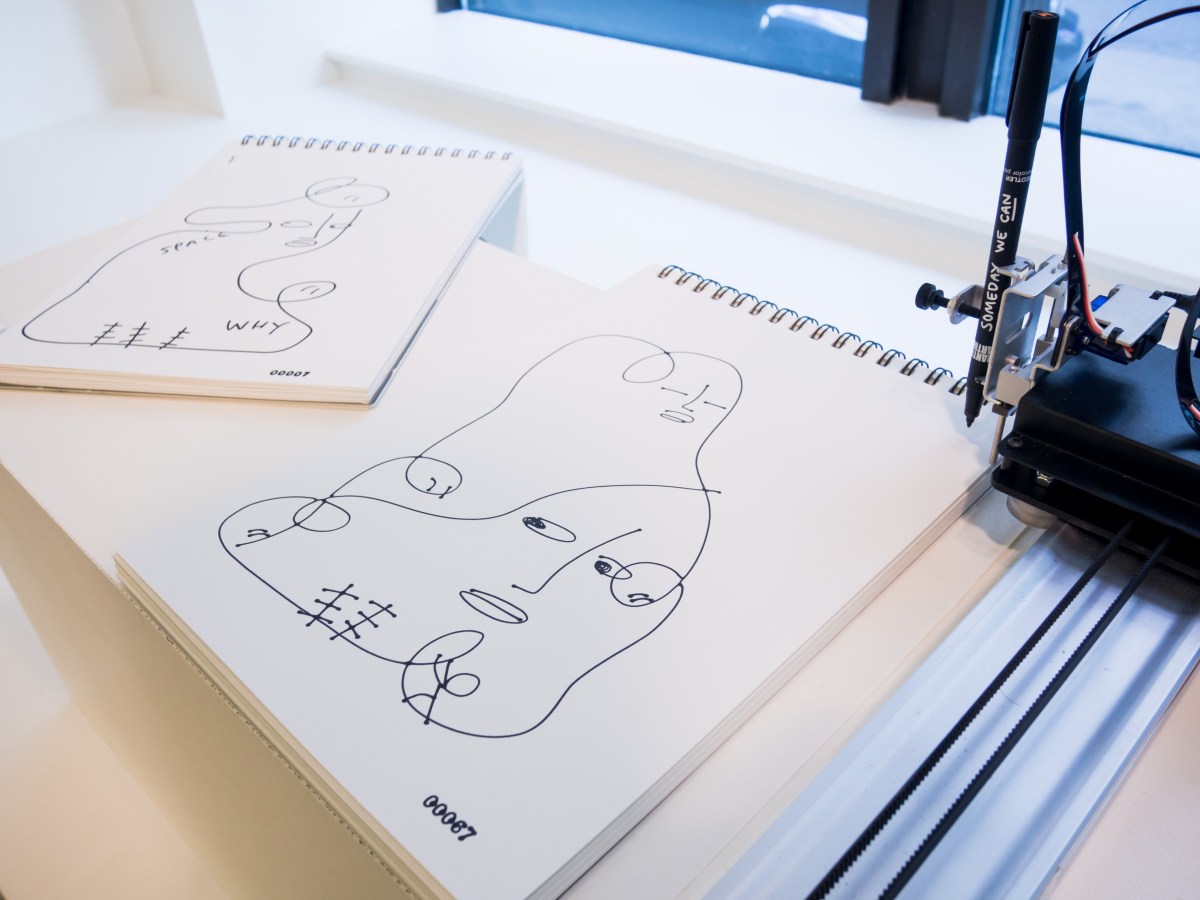
Artificial Intelligence is an emerging medium in the contemporary art world. Only recently has technology improved enough to allow the creation of algorithms capable of preforming complex tasks like generating an original image. AI art is pivotal within the history of contemporary art because it gives artists a new medium by which to create unique works, and a new framework through which they can explore and extrapolate upon on the role of the artist in the creation of a work. The Bauhaus idea of the artist as an engineer is invoked, as to code AI one must be intensely familiar with computer science and coding. It also allows artists to further explore ideas of randomness, iteration, and artistic authorship that the Abstract Expressionists and Surrealists experimented with before them. Continue reading →