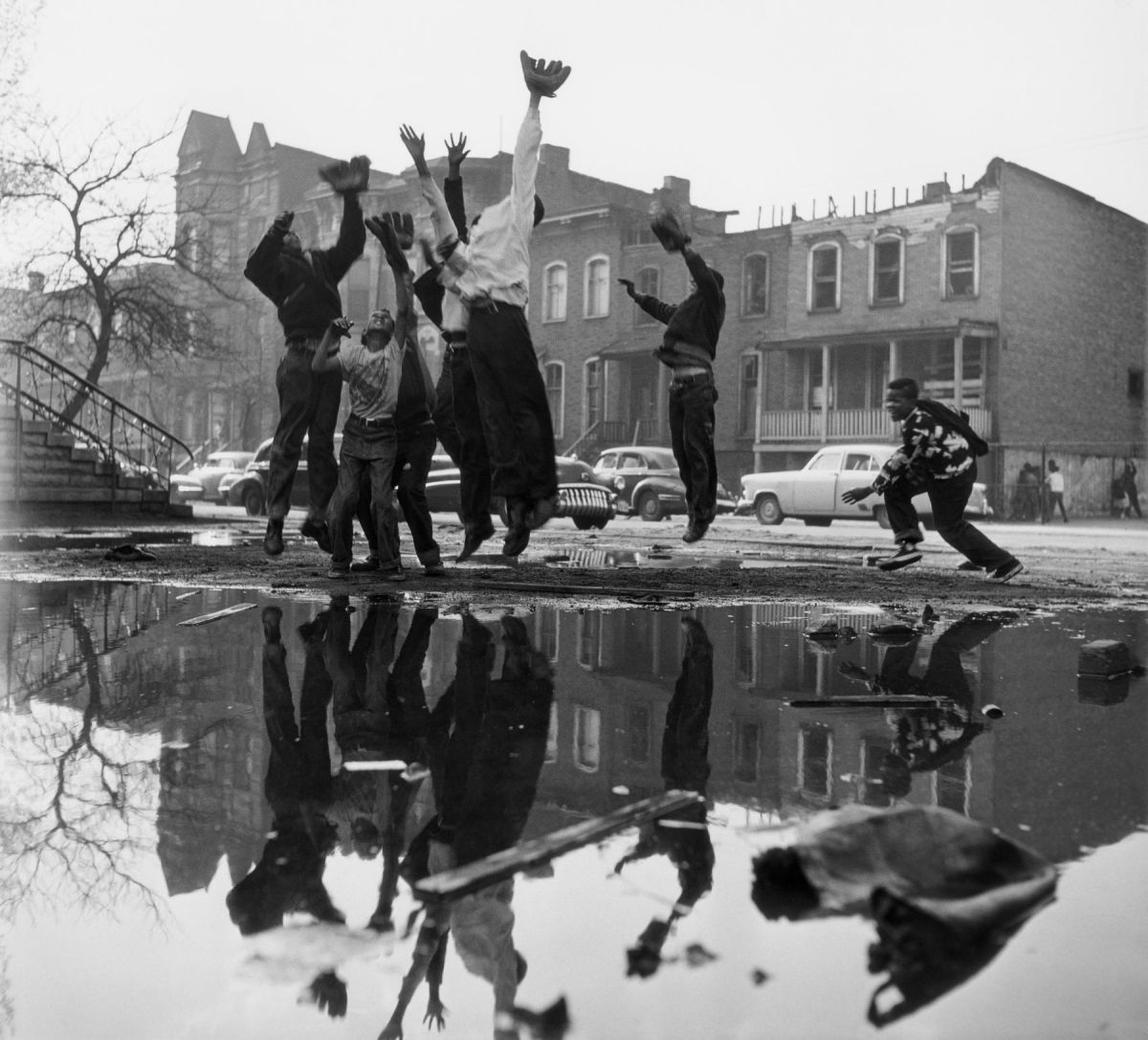
It’s already a well-known fact that the art world is heavily saturated with predominantly white male artists. Other artists of different ethnic backgrounds, however, tend to struggle with the representation, of not only with their art but in their daily lives. It’s a struggle to even be considered a human being by the general public as it is, so when I saw the photographer Gordon Parks presented in class my eyes lit up. Parks’ work really challenged the narrative placed on black Americans. Parks highlighted the will and determination to pursue the American Dream through the eyes of Black people despite years of disenfranchisement.
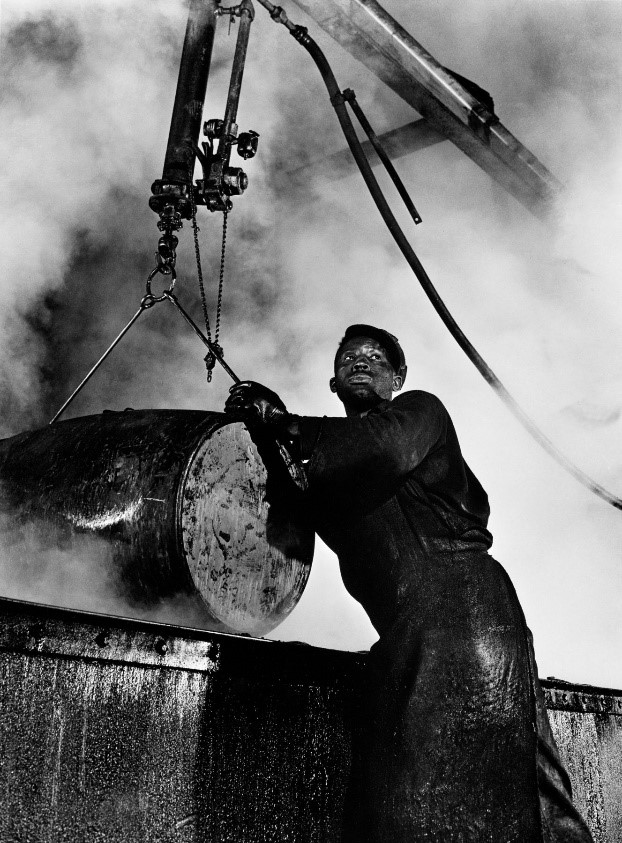
Grease Plant Worker features a young Black gentleman in a factory that is glancing into the distance, beyond the photographer. His body is leaning against a suspended barrel that he’s guiding. This body language promotes strength in the literal sense since he’s physically moving the object, but also through the metaphorical push the gentleman is making for his life: forward. The use of the man’s stance and the subject matter of where he worked effectively fought the narrative perpetuated by the media of Blacks being dangerous and lazy.
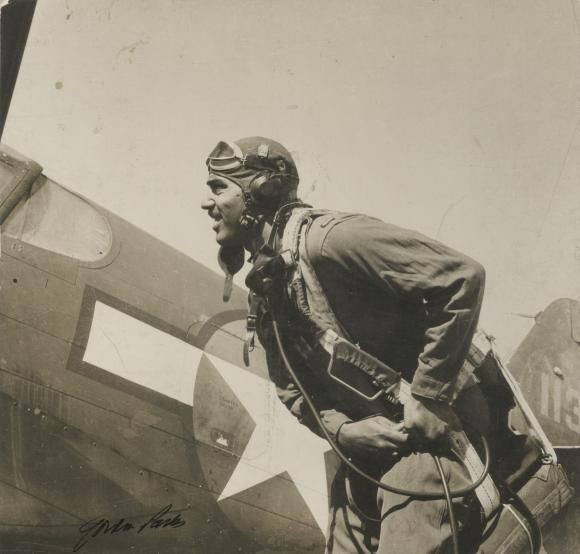
Further combating the common misconceptions of the time, Parks photographed a dynamic shot of George Knox II, a black American pilot that pushed boundaries and defied the rules that shaped the social structure of America at that time. In the photograph, Knox is strapped in his gear preparing himself for his training with his team. This smiling serviceman demonstrates that he’s willing to sacrifice for the country alongside his fellow men to protect his place of birth, although the same country does not treat him as an equal.
Photography and other visual depictions of the 1940s usually featured the slow climb of white America as the face of the struggles to prosperity. But they weren’t the only community affected by the fall of the economy and the efforts of the other Americans restoring the country back to its glory. The accomplishments of the country were wildly inaccurate towards the minority groups, especially Black folk. Through his photographs, Parks shows that he and the black community residing in the melting pot that is the United States are strong, with goals, determination, and are more than the racist prejudice constantly presented.
Sources
Courage, Richard A. “Re-Presenting Racial Reality: Chicago’s New (Media) Negro Artists of the Depression Era.” Technoetic Arts: A Journal of Speculative Research 10, no. 2/3 (December 2012): 309–18. doi:10.1386/tear.10.2-3.309_1.
“George Levi Knox, III’s Biography.” The HistoryMakers. Accessed December 1, 2019. https://www.thehistorymakers.org/biography/george-levi-knox-iii.
Mitchell, Kristina E., Amanda Martin-Hamon, and Elissa Anderson. “A Choice of Weapons: Photographs of Gordon Parks.” Art Education 55, no. 2 (March 2002): 25–32. doi:10.2307/3193987.
“The Gordon Parks Foundation.” Gordon Parks Foundation. Accessed December 1, 2019. http://www.gordonparksfoundation.org/.
 Issues in Contemporary Art